Blog
Notes from turning ideas into live, running products — AI products, cloud storage, SEO and full-stack practice. The brief is short and frequent; this is long and occasional.
- 2026-07-31 How to Ship Your First Live Product in 30 Days A practical, step-by-step 30-day product launch guide for CTOs, engineering managers, and senior engineers. It covers MVP scoping, architecture, vertical-slice development, observability, pre-launch review, and controlled rollout. Key takeaway: shipping fast requires ruthless scoping, early deployment, and direct user engagement — not cutting quality corners. Read →

- 2026-07-28 Building a High-Performing Full-Stack Team from Scratch This article guides technical leaders on building high-performing full-stack teams, arguing it's an architectural—not just a hiring—challenge. Key takeaways: map technical surface area before hiring, design explicit ownership from day one, and invest in feedback loops early. Targets engineering directors and startup CTOs. Read →

- 2026-07-28 ChatGPT's 7 Hidden Features: How It's Quietly Becoming an Operating System This retrospective compares six social posts covering ChatGPT's 7 hidden features (project spaces, remote Codex control, chat branching, etc.), arguing ChatGPT is shifting from chatbot to operating system. It shows how platform format shapes depth and framing, offering marketers a lesson on tailoring the same story across channels. Read →

- 2026-07-28 Choosing the Right LLM Provider for Your Product in the Current Market A practitioner's guide to selecting LLM providers (OpenAI, Anthropic, Gemini, Llama, Mistral, Cohere, AWS/Azure, multi-model routing) for production AI products. Targets engineering teams and product builders. Key takeaway: prioritize data sensitivity, cost model, and team infrastructure capability over benchmark scores; build provider abstraction early to avoid lock-in. Read →

- 2026-07-28 Designing Multi-Agent Systems: Lessons from Real Deployments A practitioner-focused deep dive into multi-agent AI system design for engineers and technical leaders. It argues MAS success depends on systems design—not model choice—covering topology patterns, cost governance, failure handling, and observability. Key takeaway: design workflow graphs before agents, treat token cost and HITL as architectural concerns from day one. Read →

- 2026-07-28 Running Effective Technical Reviews: A Framework for Engineering Leaders This article compares four technical review approaches (ad hoc, checklist, formal design, continuous feedback loops) for engineering leaders. It helps CTOs, directors, and senior engineers select the right review framework by context. Key takeaway: continuous review with feedback loops scales best, while formal design review suits high-stakes decisions only. Read →

- 2026-07-28 How to Transition from Senior Engineer to Engineering Director A comprehensive, practitioner-tested guide for senior engineers transitioning to Engineering Director roles. Covers identity shift, cross-functional breadth, leadership skill-building, communication, team-building, and organizational navigation. Ideal for experienced engineers ready to make a deliberate, structured leap into engineering leadership. Read →

- 2026-07-20 Weekly AI Roundup Explained: 8 Breakthroughs Shaping AI Technology Trends A retrospective comparing how the same week's AI news (trillion-parameter models, multimodal releases, a mosquito-zapping robot) was framed differently on LinkedIn versus YouTube. Highlights that format shapes emphasis, hardware democratization matters, and compute costs are falling—useful for readers tracking AI trends across formats. Read →

- 2026-07-16 AI Weekly Roundup: GPT-5.6, On-Device Models & Humanoid Robot Breakthroughs Across 4 Platforms A meta-editorial retrospective analyzing how an AI news team covered a major week of AI developments (GPT-5.6, on-device models, humanoid robots) across LinkedIn, Pinterest, TikTok, and YouTube. Aimed at content creators and AI-curious professionals, it argues that simultaneous cross-stack AI progress demands layered, platform-tailored coverage. Read →

- 2026-07-13 This Week in AI: How We Covered 5 Platforms, 1 Big News Cycle, and 3 Breakthrough Stories A cross-platform editorial retrospective on a weekly AI news roundup covering Claude Fable 5, Meta brain-decoding, and Sam Altman's UBI proposal. Targets content creators and AI-curious professionals. Key takeaway: the same AI story requires five distinct formats per platform, and a structured weekly digest beats an information firehose. Read →
- 2026-07-11 How Chinese Startups Can Use AI to Compete with Larger Incumbents Article argues Chinese AI startups can outcompete larger incumbents not through spending but by embedding AI natively into architecture, focusing on narrow verticals, and iterating faster. Provides actionable framework across engineering, data moats, and ecosystem strategy for founders and technical leaders. Read →

- 2026-07-11 Choosing Between AI Productivity Platforms: A Decision Framework for Professionals Article presents a decision framework for choosing AI productivity platforms, arguing integration depth matters more than feature count. Targets engineering leaders and professionals, offering a 3-step evaluation method, comparison table, and FAQ. Key takeaway: prioritize native AI architecture and total cost of ownership over surface-level AI marketing claims. Read →

- 2026-07-11 Choosing the Right Vector Database for Your AI Application This Year Guide compares 7 vector databases (Milvus, Pinecone, Weaviate, Qdrant, Chroma, pgvector, Elasticsearch) for AI/RAG apps, matching options to team scale, latency needs, and operational capacity. Offers decision framework, comparison table, FAQ, and soft CTA—valuable for engineers choosing production-ready vector infrastructure. Read →

- 2026-07-11 From Content Creation to Monetization: Closing the Loop with AI Tools Article argues native AI-integrated "creator cockpits" outperform fragmented tool stacks and generic all-in-one suites for closing the content-to-monetization loop. Compares workflow continuity, cost, and scalability. Targets creators/engineering teams, concluding integrated architecture drives compounding monetization value over time. Read →

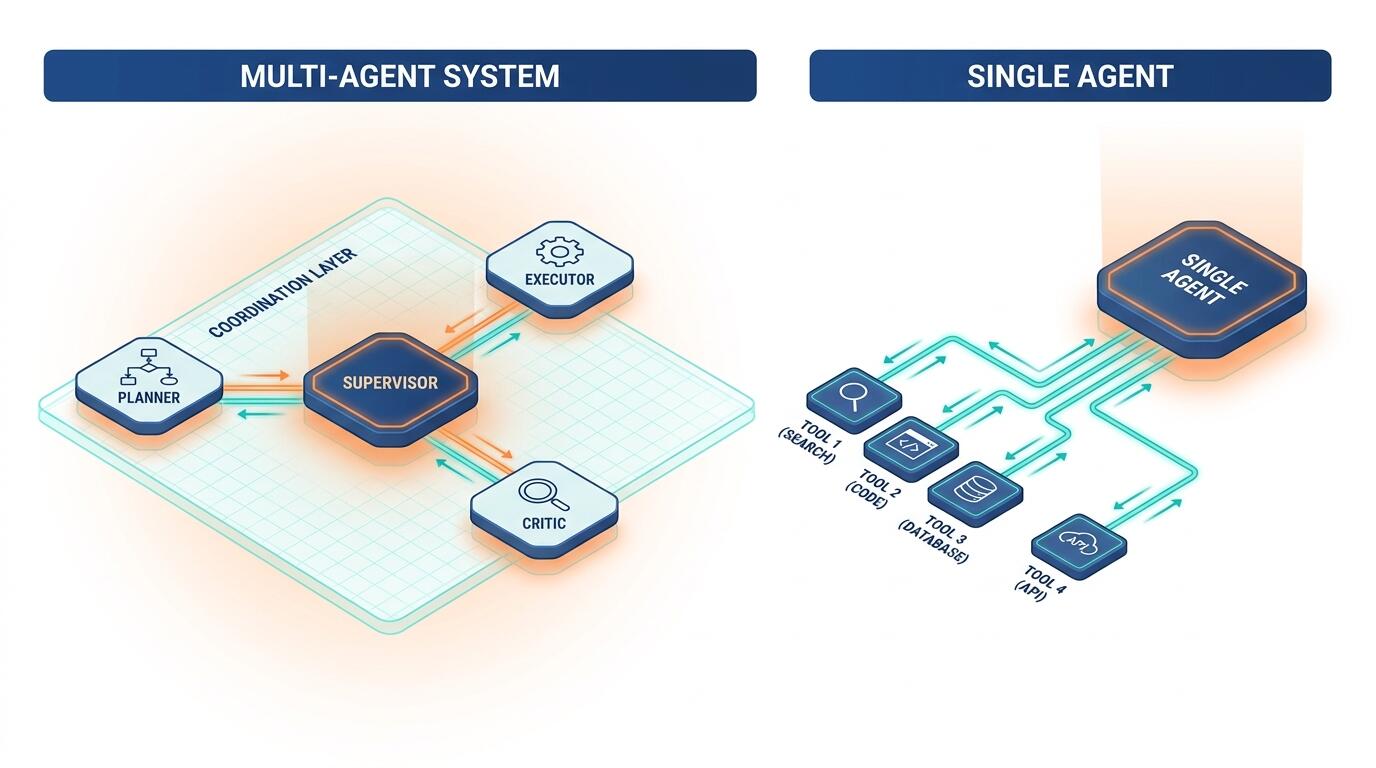
- 2026-07-11 Multi-Agent Systems: When to Use Them and When to Avoid the Complexity Article argues multi-agent AI systems only justify their complexity for parallel, multi-tool, or verification-heavy tasks; otherwise a well-tooled single agent is faster, cheaper, and more reliable. Targets engineering leaders/builders with a decision framework, comparison table, and actionable checklist before adopting multi-agent orchestration. Read →
No posts yet