OpenAI releases GPT-6.2 Astra and Sol, Microsoft Ignite brings MAI Code 2, GitHub and Microsoft use AI to get 55 vulnerabilities fixed in six open source projects
Today's thread is that the bottleneck for coding agents is moving from writing to checking: in one day Copilot gained two new model families, GPT-6.2 and MAI Code 2, while GitHub added risk-based code review, evals for skills and MCP tools, and a vulnerability process that sends only verified findings. The faster models change, the more it matters to judge them on your own data.
On November 17 OpenAI released two models, GPT-6.2 Astra and GPT-6.2 Sol.
The improvements it lists: better professional outputs, stronger coding and computer use, higher efficiency, and lower cost.
Both models ship across ChatGPT Work, Codex and the API.
Builder's takeOpenAI's RSS gives direction but no prices or scores, so I would not switch on that alone. Both models also landed in GitHub Copilot and Amazon Bedrock the same day, and GitHub says 6.2 Sol finds nearly twice as many real issues in code review as 6.1 Sol. My move: swap code review to 6.2 Sol first, replay the last 20 PRs in your own repo, count real findings and false positives, then decide whether to touch your main coding model.
MAI Code 2, the new flagship agentic coding model, targets taking code to production, deep debugging, multi-file implementation, repo-wide reasoning and UI at what Microsoft calls a fraction of frontier cost; Code 2 Flash handles fast, high-volume work like code explanations and targeted edits. Both are generally available today in GitHub Copilot (model picker and Copilot Fusion) and in Foundry.
Microsoft announced MAI Licensed Weights: trusted customers can get access to Microsoft AI model weights through Frontier Co.
Microsoft-Decision-1.1 is generally available with multimodal support, and more than 4,000 customers have already used it; GPT 6.2 and Meta's latest models are coming to Foundry.
Agent 365 already has over 50 million agents and adds Agent 365 Business Analytics to tie AI spend to outcomes; the agentic security system Perception is generally available, alongside the security model Cyber 2 Flash.
Builder's takeMAI Code 2 is in Copilot's model picker, so Copilot teams can compare it on the same tasks today without wiring up another API. I would put Code 2 Flash on PandaClaws' routine back-end fixes for a week and judge it on rework rate and cost per task. The weight licensing is far from a team our size, but for large customers with data residency needs it is a new option worth noting.
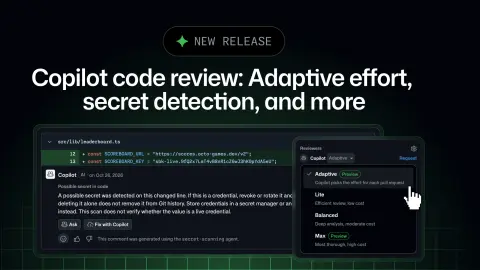
Adaptive (public preview) chooses Lite, Balanced or Max for each PR based on its complexity and risk and shows which it picked; it never goes above the maximum set for the enterprise, organization or repository, and Balanced stays the default.
Cross-repository context (public preview, public repositories): reviews can read related public repositories to find code that depends on the change, plus documentation, custom instructions and skills stored elsewhere.
Secret detection (public preview) uses regex for 500+ known secret types from 150+ partners, and LLMs plus GitHub's own model to find secrets with no recognizable format.
The features are for Copilot Pro, Pro+, Max, Business and Enterprise; each repository's Insights tab now shows how code review feedback is addressed.
Builder's takeI would make Adaptive the repo default but cap the maximum at Balanced for two weeks, see how many PRs it rates Lite, and only then open up Max, so cost does not creep up quietly. Turn secret detection on now: coding agents dropping a test key into config is common. Read with the 11-13 AI Scan API item, GitHub is filling in code security quickly.
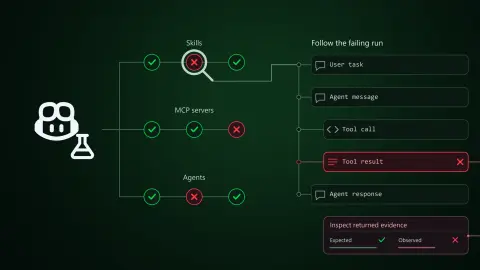
Ask Copilot in your own words or use the /eval command to create an eval for a skill, custom agent or MCP tool in your project; evals check both the result and how the agent got there.
You approve each run before it starts, see which checks passed or failed and why, and compare runs from before and after a change.
The evaluation engine is Vally, an extensible local eval tool.
Install it as a VS Code extension, a Copilot CLI plugin, or in the Copilot app via the github/evals marketplace; it is in public preview for Copilot Individual, Business and Enterprise.
Builder's takeThis is the one I wanted most. We have written a pile of skills for our coding agents and judge changes mostly by feel, which gets worse every time the model changes. I would write five eval cases for each of our three most-used skills and rerun them on every skill change or model swap, such as today's GPT-6.2 or MAI Code 2, keeping the results on file.
Microsoft's multi-model agentic scanning harness, Codename MDASH, used the MAI Cyber model to scan six projects (AutoGPT, Caddy, Express, FastMCP, ImageMagick and Netty), all alumni of the GitHub Secure Open Source Fund, with their maintainers' agreement.
The pipeline: MDASH flagged thousands of possible issues with suggested fixes; an AI triage agent from GitHub Security Lab removed duplicates and checked validity; seven Microsoft FORGE Lab researchers verified every remaining finding by hand; reports went out through private vulnerability reporting with a proof of concept and a fix.
Maintainers received 99 reports; as of November 15 they had fixed 55, and 14 of those fixes were already in a release.
The first fixes shipped about a week after the initial scan; Caddy fixed all 22 of its reports in a week or less.
Builder's takeThousands down to 99 is the lesson in itself: the value of AI scanning is in filtering and verifying, not volume. When we wire up AI security scanning, I would require every result to come with reproduction steps and a patch, or not come at all. FastMCP is on the list, so teams building MCP servers on it should check recent release notes and make sure they have upgraded.
The Agent Host Protocol (AHP) is an open standard built first in VS Code and adopted across GitHub, letting an agent session start in one place and continue in another instead of ending when an editor window closes.
It is organized around URI-identified channels: every server must implement the root, session and chat channels and can add others such as terminal, MCP or OTel. Each channel holds reducer-based state; the server arbitrates and clients send actions, which makes reconnection and replay straightforward.
Libraries exist in Rust, TypeScript, Kotlin, Swift, .NET and Go; you can connect your own agent host in the Copilot app (Experimental > Direct Connections) and VS Code, and run code agent host to spawn a standalone VS Code agent host.
Builder's takeOur background agents keep their state scattered across logs and the database; this design, where the server owns the state and clients only send actions, is worth copying outright. Even without plugging into Copilot, I would restructure PandaClaws' publishing agent's session state as reducer-style state so a phone or board view is easy later. Read with the 11-13 always-on agent architecture item: agents are turning from one request into a long-lived session that clients attach to.
Linked billing launches in beta behind the user-profiles-billing-2026-10-01 beta header.
Once a customer links their Claude organization, you set billing_policy on each /v1/messages or /v1/chat/completions request to choose who pays.
In the Claude Console, customers can set a spend cap for your app or unlink it.
It works only for customers whose organization pays Anthropic directly for API usage.
Builder's takeThis is practical for a product like PandaClaws whose usage swings widely: large customers pay model costs on their own Claude contract and we charge only the platform fee, so heavy users stop eating the margin. Per-request billing_policy also allows a mix, where we pay during a trial and the customer pays afterwards. Note it only covers organizations paying Anthropic directly; customers buying through a cloud marketplace cannot use it yet.
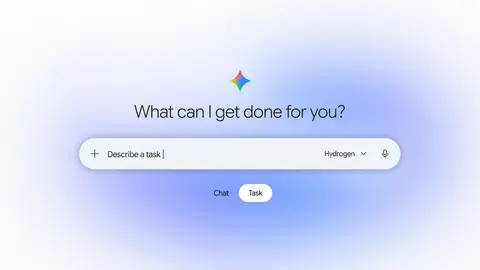
Entry points: switch the Gemini app from Chat to Task, text Gemini over RCS on Android or iOS, or forward emails to gemini@google.com. It can call several businesses at once to book appointments, saying up front that it is an AI; businesses can opt out.
It runs on Gemini 4 Hydrogen and is rolling out free to hundreds of millions of people in the US, Japan, Korea, Canada, Australia and India, with some advanced features starting in the US.
Purchases go through the Agent Payments Protocol (AP2) with Mastercard and Visa (American Express coming soon) using digital tokens; you can set a hard spending cap upfront, receipts land in Google Wallet, and the Universal Commerce Protocol is next. It connects with 60+ apps, and developers can apply to the Connected Apps Platform.
Each task runs in a hardware-isolated VM dedicated to the account on Google Cloud's Agent Compute Engine, with prompt-injection filters and Safe Browsing limiting which links it opens.
Builder's takeRead with the 11-13 ChatGPT Wallet item: both companies now treat an agent spending money as a default capability, backed by caps and approvals. If our products have a payment or booking step, now is the time to plan for protocols like AP2 and to check our pages still work when an agent visits. One isolated VM per task is also a good bar for how our background agents should handle user credentials.
AgentCore gateway's Web Search Tool and the Web Search API now include 5,000 free queries a month, applied automatically with no setup.
The allowance is shared across supported Regions and by all accounts in an organization and resets monthly; extra queries are billed at standard rates without interrupting agents.
Regions: US East (N. Virginia, Ohio), US West (Oregon), Europe (Ireland), Asia Pacific (Sydney, Tokyo).
Builder's takeAt the $7 per 1,000 queries from the 11-11 item, this is about $35 a month of searches: small, but enough for development, testing and low-traffic internal tools. The allowance is shared across the whole organization, so once production traffic grows, test accounts compete with it for the same pool; set a separate budget alert for search.
Dense attention's cost per query grows with context length and at 128K tokens can take most of a layer's prefill time; model-level sparse attention lets each query attend to a small subset of keys, but scoring all keys moves into an indexer that still processes the full context.
Design advice: use a single key head in the indexer with a cross-head reduction; pick an indexer head dimension of 128 or 256; run the epilogue and accumulation in FP16; cut the number of keys scored through compression, hierarchical indexing or index sharing.
Guess-Verify-Refine treats the previous decode step's selection as a guess and verifies it in one pass, running 2.1x to 2.4x faster than a standard radix select on DeepSeek V3.2 and V4 decode; the fused version is in TensorRT LLM, and FlashInfer has an open-source fused indexer and Top-k.
Builder's takeWe do not train models, but this explains why sparse-attention models like DeepSeek's are cheap on long context. For whole-document Q&A in our AI cloud drive, I would prefer open models with sparse attention and confirm the serving stack uses the fused TensorRT LLM or FlashInfer path, or much of the long-context cost advantage is lost.
Researched and drafted with AI assistance; editorial standards and views set by Darius.
Every Monday, the week in AI in one email
Every Monday morning: the 6 AI stories that mattered most in the past seven days, with my take, in your inbox.
Your email is only used to send the weekly and is never shared. Every email has a one-click unsubscribe link. See the latest issue →