Google releases Gemini 4 Neon, Cloudflare opens the weights of its Clairic extraction models, Airbnb shows how it picks coding models by cost per task
Today's thread is choosing models by cost per task: Google slots Neon between Carbon and Hydrogen and leads with a 32% lower cost per task than Carbon; Airbnb shows how it handled eight new models in five weeks using its own tasks and cost per task; and Cloudflare and Rumble hand narrow jobs like extraction and transcription to smaller open models. The more models there are, the more each kind of task should go to the cheapest one that is good enough.
Pricing: $3 per million input tokens, $0.15 per million cached input tokens (a 95% discount), and $15 per million output tokens, with a 1M-token context window.
At its xhigh thinking level it scores 61 on the Artificial Analysis Intelligence Index, #3 overall; at the default high level its cost per task is 32% lower than Gemini 4 Carbon.
It rolled out the same day in the Gemini API (paid tier in AI Studio), Antigravity, and the Gemini app for AI Pro and Ultra subscribers.
The same day GitHub said Gemini 4 Neon is generally available in Copilot for Pro+, Max, Business and Enterprise, billed at provider list price.
Builder's takeNeon is priced between Hydrogen ($1.50 / $7.50, from 11-13) and Carbon, and lands ahead of Carbon's December price rise, so the intent is clear: take over the everyday agent work that runs on Carbon today. My move: rerun your Carbon tasks on Neon at high and compare cost per task and success rate, not unit price. For long contexts, use caching: the $0.15 cached rate is where the real savings are.
The new Clairic uses parallel slot autoregressive generation: each field generates on its own and stops at its own end marker. It still returns confidence scores, character spans and probabilities.
It now reads PDFs, with up to four images or PDF pages per request; on internal benchmarks image reading errors fell from 207 to 0, with responses in under one second.
The 27B Clairic costs $0.24 per million input tokens and the 9B Clairic-flash $0.10, with no charge for output; until December 1 both cost $0.10.
Full open weights for both models are published on Hugging Face.
Builder's takeAfter a file is uploaded, AI Cloud Drive needs fields like title, date and amount, and running that on a general model is expensive and unstable. A small model that only extracts and returns confidence, like Clairic, fits that job. I would use the pre-December 1 price to run the 27B version on a batch of real receipts and PDFs, and send low-confidence fields to a large model as fallback. Cloudflare's evals are self-reported, so validate on your own samples.
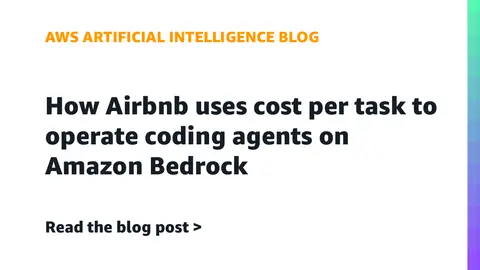
Thousands of engineers and engineering-adjacent people use AirChat, Airbnb's internal tool for coding agents, every week; requests go through an LLM gateway running on Amazon Bedrock.
Eight new models came out in about five weeks; by mid-October about two thirds of coding agent requests went to those new models.
On one model, moving from low to high effort raised the score by 0.8 points while cost per task was 2.5 times as high; the gateway enforces an effort ceiling per model.
A newer model scored higher on the same tasks and grader at about a sixth of the cost per task, and users were moved to it with a configuration change.
Builder's takeRead with yesterday's GitHub items, the conclusion is the same: models change too fast, and the only reliable yardstick is your own tasks plus cost per task. I would copy two things: run every new model on your own tasks at each effort level on release day, and set effort ceilings in the gateway with low or medium as default. Paying 2.5x for 0.8 points is not worth it for most everyday changes.
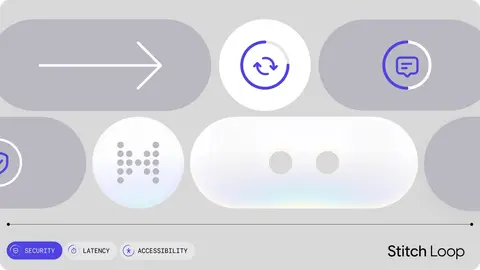
It connects GitHub and product context such as logs, user behavior and feedback through 180+ integrations, custom MCP servers or local CLI uploads.
Each loop runs four steps: suggestions, solutions, build (writing code in an isolated cloud sandbox and opening a GitHub PR), and reflect (watching live data, and continuing to watch once the goal is met).
It ships with default loops for security, latency and accessibility, with the security loop pairing Gemini 4 Carbon and DeepMind's CodeMender; custom loops such as checkout conversion can be added.
The waitlist is open globally, with Google AI Ultra users first; other coding agents can pull its product context through the Stitch CLI and MCP.
Builder's takeI run three products alone, and the stretch after launch is exactly what I lack time for: watching metrics, catching regressions, fixing small issues. Stitch Loop's design is worth copying: driven by measurable goals, opening PRs but never merging on its own. Until I get off the waitlist I would build a minimal version myself: have a coding agent read the error logs and conversion funnel once a day, allow it only to open PRs, and require evidence in each PR.
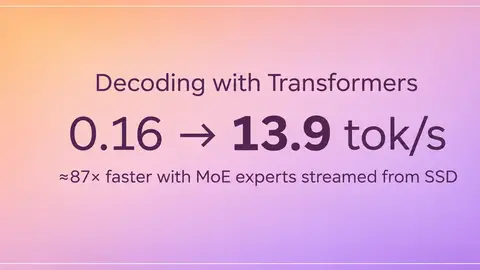
Experts are 90%+ of a MoE model's weights; the approach keeps experts on disk and a single on-device slot pool shared by all layers, so grouped_mm runs as is.
With every expert cached, speed went from 10.1 tok/s in the first version to 34.6 tok/s (38.1 for vanilla); prefetching the next two layers' experts raised prefill from 68 to about 228 tok/s.
Running Qwen3.8-Flash-Next on a 32 GB M5 MacBook, it is about 6% behind Strata on short decode with slightly faster prefill, using about 18 GiB after loading.
The code is in PR huggingface/transformers#50717, with the API still under discussion with maintainers; the author says all the code was written with AI.
Builder's takeThe author says 14 tok/s is too slow for coding agents, so the value is not "180B on a laptop". It is that once Transformers supports per-expert offload natively, evals and offline batch jobs can use large MoE models without switching frameworks. I would wait for the PR to merge; for local runs today, llama.cpp or Strata is the practical choice.
GPU-accelerated Event Functions run on EC2 G-series instances, scaling on GPU utilization, CPU utilization and concurrency, with multiple invocations per execution environment.
GPU base images come with vLLM, SGLang and PyTorch; container images and NVMe ephemeral storage go up to 32 GB each, with SOCI lazy loading and streaming from S3.
Pricing: the EC2 On-Demand price (Savings Plans and Reserved Instances apply), plus a 9.75% Lambda management fee and $0.20 per million requests.
It is available in all commercial regions where both Lambda Managed Instances and G-series instances exist.
Builder's takeIn a content backend like PandaClaws, transcription, frame extraction and small-model scoring come in bursts, and a dedicated GPU sits idle most of the time. This Lambda shape lets "upload triggers GPU processing" plug straight into event sources. I would move one self-hosted small model, such as open-source speech transcription, first, and weigh the 9.75% fee against idle GPU cost before going further.
The Microsoft Copilot harness is in public preview: Microsoft runs the agent loop and sandbox, developers bring knowledge, skills and tools, and agent definitions can live in source control.
Voice agents are generally available, with interruptions and native telephony; computer use and browser automation are generally available, with Live View, Take control and session recordings in customer-owned storage.
Network egress controls for hosted agents are generally available, enforced outside the sandbox; default quotas are 1,000 to 2,000 concurrent sessions per subscription and region.
Memory snapshots are in public preview, cutting cold starts by restoring an initialized agent state.
Builder's takeAlongside Anthropic's self-hosted Managed Agents on 11-12 and AgentCore's new runtime, all three now sell the same thing: you write what the agent knows, and the platform owns the loop, sandbox and egress controls. My advice: start with an egress allowlist, which should be a default on any platform; the harness is still in preview, so do not lock production work to it yet.
0.5B parameters with automatic detection across 40+ languages; it uses the Qwen3-ASR architecture, with native Transformers and vLLM support and no custom code.
On the Open ASR Leaderboard multilingual track (nine languages including Chinese, German, French and Hindi) it averages a 6.96% error rate, better than Meta's omniASR-LLM 7B, 15x larger, and Whisper large-v3; English WER averages 6.6%.
Throughput exceeds 7,000 RTFx on full batches, about half a second per hour of audio; on a 302-hour call-centre benchmark it is on par with NVIDIA's Nemotron 3.5 Transcribe (30B).
It was distilled from the larger Rumble-2 with on-policy distillation, using GOLD to handle teacher and student having different tokenizers.
Builder's takeAI Interview transcribes candidate answers before analyzing them, and a 0.5B Apache 2.0 model that runs on vLLM could replace per-minute cloud transcription. I would test character error rate on real Chinese interview recordings, focusing on accents and mixed Chinese-English. Its phone-call result is an English benchmark, so verify Chinese yourself.
Built on Qwen3.8-27B with reinforcement learning using Miles; trained for 18 days on 144 H200 GPUs, with sessions up to 1M tokens, released under Apache 2.0.
Terminal-Bench 4.1 pass@1 rises from 5.6% to 12.0%, and it scores higher than the original model on every benchmark listed.
About 1,200 tasks were picked from thousands of candidates, each designed around a mistake the original model makes, with up to 1.5 hours, 100+ tool calls per attempt.
It keeps the original architecture, tokenizer, chat template, image understanding and 256K context; SGLang with DSpark speculative decoding is the recommended serving setup.
Builder's takeAt 12% it is still far from closed frontier models, so I would not use it as a main model. What is worth studying is the task selection: only tasks the original model fails and cannot game, and 1,200 of them were enough to move the score. If you plan to post-train your own agent, build the task set from your failure cases like this first; it pays off more than piling up data.
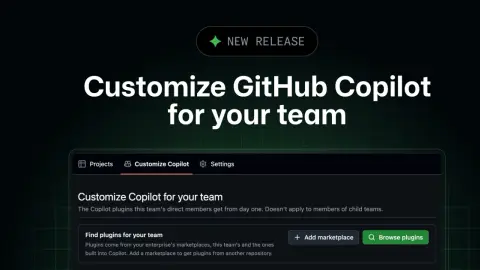
Team maintainers and organization owners can open the Customize Copilot tab on a team and pick plugins from built-in, enterprise or team-added marketplaces as team defaults.
Selected plugins are on by default for the team's direct members in VS Code, the Copilot app and Copilot CLI; child team members do not inherit them, and members can turn them off where policy permits.
Enterprise and organization policies take precedence over team choices, and clients still enforce allowed marketplaces and required or blocked plugins.
Available for Copilot Business and Copilot Enterprise.
Builder's takeYesterday's Copilot Evals covers whether a plugin is good; this covers how it gets distributed. Together, team-level skills can be tested and released like code. My advice: create a plugin marketplace repo for your team, put in only plugins that passed evals, and make those the team default instead of everyone installing their own set.
Researched and drafted with AI assistance; editorial standards and views set by Darius.
Every Monday, the week in AI in one email
Every Monday morning: the 6 AI stories that mattered most in the past seven days, with my take, in your inbox.
Your email is only used to send the weekly and is never shared. Every email has a one-click unsubscribe link. See the latest issue →