Gemini API loads tools on demand, Anthropic prices its IPO at $83, Gemini operates your Mac
Today's thread is the infrastructure around agents filling in: tools that load on demand to save tokens, managed harnesses with defaults and hooks, and ready-made answers for identity, payments, memory and prompt rollouts. Capability is no longer the bottleneck; the race now is whose agents are cheaper, more controllable and more accountable.
It is in preview in the Interactions API: add a tool_search tool to the request and set defer_loading to true on the tools to hold back.
The model still sees every deferred tool's name and description, asks for one by name, and the API loads the full schema and runs the function call in the same request; the search runs server-side with no index to build.
Deferred schemas stay out of the start of the prompt and loaded ones are appended later, so the cached prefix stays the same turn to turn; it also works with remote MCP servers, loading a whole server's tools on demand.
No separate charge: turning it on adds a small fixed block of input tokens, and each loaded schema is billed as input for the rest of the conversation; a client-side retrieval mode adds one round trip per search.
Builder's takeThis is the first time on-demand tool loading has become a standard switch in a major API, so an agent can carry hundreds of tools without paying full price for them. My advice: keep the three to five most-used tools loaded, defer the long tail, then compare input tokens and wrong-tool picks on your own traffic before and after. A backend like PandaClaws, wired to many publishing channels, is exactly where the long tail lives.
Class A common stock is priced at $83.00 a share across 980,000,000 shares: 956,351,354 sold by Anthropic and 23,648,646 by certain selling stockholders, whose proceeds do not go to the company.
Shares are expected to begin trading on the Nasdaq Global Select Market on November 19 under the symbol ANT, with the offering expected to close on November 20.
Underwriters have a 30-day option to buy up to 147,000,000 more shares; the SEC declared the registration statement effective on November 18.
Builder's takeI won't comment on the stock, only on what changes for builders: a public company reports every quarter, so Anthropic's pricing, model retirements and platform policies should become more predictable, and more tied to the earnings cycle. Read with the 11-17 Linked billing item, it is writing down the rules for doing business on Claude. Teams that depend on Claude should put model versions and billing choices in config rather than bet on any price staying put.
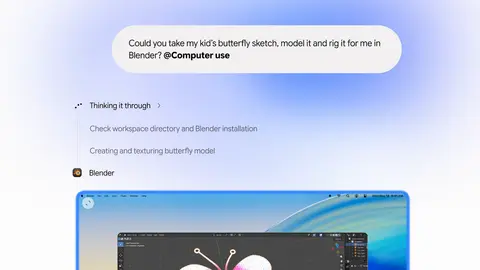
Gemini clicks, types and works through menus and forms in an isolated background window with a live preview in the chat, leaving the user's main screen and cursor free.
Users choose which apps Gemini can access, can pause at any time, and approve key actions before they happen.
It is rolling out in English in the US, needs an Apple Silicon Mac on macOS Sequoia 15.0 or later, and is for personal accounts 18+ on Google AI Plus, Pro and Ultra.
Builder's takeAn isolated background window, per-app permission and approval at key steps: that is now close to the standard design for desktop agents. If your product touches users' local files, as the AI Cloud Drive desktop client does, copy its permission granularity first: grant by app rather than the whole machine, and put approvals before writes and submissions, or users won't hand over real work.
AgentCore harness now runs on Strands harness (Apache 2.0); with no model set it uses a recommended default that changes as new models ship, while explicit model settings take precedence.
Defaults include automatic prompt caching (first for Anthropic models on Bedrock) and summarizing older turns once context hits a threshold; AWS says this runs at about 34% lower token cost than other leading harnesses.
New built-in tools cover planning, web retrieval, filesystem access, context offloading and task delegation; lifecycle hooks run deterministic checks and notifications at fixed points in the agent loop.
Existing harnesses get the upgrade automatically with no new resource type; AWS advises apps with a fixed security boundary to list only the tools they need, since the default set can grow.
Builder's takeRead with Microsoft's Copilot harness from 11-18, handing the loop to the platform is now the consensus. But a default model that changes on its own and a default tool set that grows on its own are risks in production. I pin the model and the tool list explicitly in production and only take defaults in test. Hooks are the most useful part: put a deterministic check before writes such as refunds or publishing.
These agents work under their own identity, with their own email, calendar, OneDrive, Teams presence and place in the org chart, each with an accountable manager; every action is attributed to the agent.
They can work in multi-user spaces such as Teams group chats and reply to email, edit Excel sheets and build PowerPoint decks even when no one is signed in.
Developers publish a blueprint in Foundry and deploy it as a hosted agent; once an admin approves it, approved people each hire their own instance with its own identity and access. Autopilot in Microsoft 365 Copilot is the same type.
Nous Research's Hermes Enterprise is self-hosted in a company's own Azure tenant as Foundry hosted agents.
Builder's takeThe most practical item I read this week: the hard part of agents is not capability but who answers when something goes wrong. Give an agent its own account and an accountable manager, and audit, permissions and offboarding reuse the processes you already have for staff. If you're building an enterprise product, separate agent identity from acting on behalf of a user in your data model now, before a customer's security team asks.
Agents find select listings through the AWS Marketplace connector in AgentCore Gateway and pay per request, with no crypto wallet needed; charges settle on the customer's existing AWS bill.
Customers can set spending limits, approved sellers and guardrails before agents transact; Private Marketplace policies still apply, and transactions show up in CloudTrail and Cost Explorer.
Sellers can charge agents per request without building sign-up or billing, with AWS Marketplace collecting payments and paying out; it is available in all Regions where AgentCore payments is available.
Builder's takeChatGPT Wallet on 11-13, Gemini Tasks on AP2 on 11-17, and now AWS on x402: three routes for agent payments in two weeks. For API sellers this is a new distribution channel, best suited to per-request pricing. For buyers, set spending limits and approved sellers before opening it up; having charges in Cost Explorer beats keeping your own ledger.
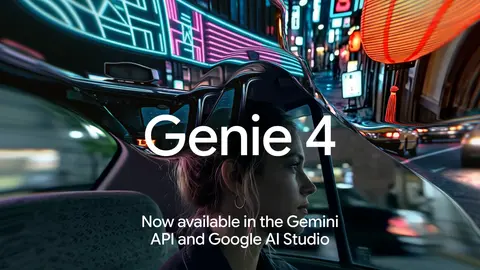
Developers can use Genie 4 through the Gemini API (via the Interactions API) and Google AI Studio, generating continuous 720p worlds at 24 fps with synchronized native audio, from ambient sound to character dialogue, starting from text, a reference image or both.
Real-time keyboard controls let you navigate while live text prompts change weather, lighting, objects or events, with Gemini reasoning keeping the world state consistent.
Every output carries an imperceptible watermark; AI Studio offers an interactive canvas and starter apps.
In the 11-18 Project Genie update, Genie 3 exploration grew from 60 seconds to up to 3 minutes per generation.
Builder's takeThis is the first time a world model is open to everyday developers through an API, but I'd treat it as a prototyping tool, not a production component: the announcement gives no price or length limits, so try it in AI Studio first. The use worth watching is training environments for agents; teams building computer-use or robotics agents can use it to make test scenarios cheaply.
The AI interviewer gathers evidence but does not score; a separate evaluation step scores with a fixed formula afterward, flags a competency instead of scoring it when evidence is thin, and does not count missing evidence against the candidate.
Scoring uses only transcribed responses, not video, voice tone or appearance, excludes candidate identity information, and evaluates each competency separately.
An independent I-O psychology firm found 91% of generated competencies traceable to the job description and 98% of questions targeting the intended competencies; scoring matched expert decisions 89.3% of the time, and 97.6% when candidates gave clear evidence.
In a preliminary evaluation, scores based on the first response alone were up to 1.14 points lower on a five-point scale than scores based on the full conversation with follow-ups.
Builder's takeThis one bears directly on my AI Interview product. What I agree with most is splitting the roles, an interviewer that doesn't score and a scorer that doesn't talk, and flagging rather than scoring when evidence is thin; both go straight at the problem of a candidate's score varying run to run, which I also wrote about in my post on why interview scores vary run to run. My advice for interview products: add a first-answer versus full-conversation comparison to your evals, and let your own data say how much follow-ups are worth.
It stores agent interaction events verbatim and makes them searchable within seconds, derives structured memories asynchronously, and on consolidation adds, updates or skips memories; retrieval supports keyword, semantic and hybrid search.
Access is controlled with IAM per memory store, with actor and session scoping and expiration periods for events and memories.
It is serverless, with no clusters, instance types or indexes; it launches in US East (N. Virginia, Ohio), US West (Oregon), Frankfurt and Tokyo.
Builder's takeKeeping both layers, raw events and derived memories, is what I think a memory system should do: when extraction gets something wrong, you can go back to the original. For a product like AI Cloud Drive that already holds lots of user documents, expiration and per-user isolation matter more than retrieval quality, so check those two before you talk recall.
AI model invocation configurations hold the model ID, inference parameters such as temperature and max tokens, and messages such as system prompts and example turns; provider-specific options go in custom parameters so one schema works across providers.
AI prompt configurations store prompts as separately versioned artifacts that can be changed on their own and reused across applications.
Changes can roll out gradually, say 10%, then 20%, then 30% of traffic, and roll back automatically when an alarm fires in CloudWatch, Datadog, New Relic or similar; it is available in all AppConfig Regions at no extra cost.
Builder's takeTreating prompts as config and rolling them out by traffic share is something many teams do with homemade flags; now it comes ready-made. Even off AWS, copy the structure: version model parameters and prompts separately, and tie every change to an alarm on token usage and success rate, so a bad change rolls back by version instead of by redeploy.
Researched and drafted with AI assistance; editorial standards and views set by Darius.
Every Monday, the week in AI in one email
Every Monday morning: the 6 AI stories that mattered most in the past seven days, with my take, in your inbox.
Your email is only used to send the weekly and is never shared. Every email has a one-click unsubscribe link. See the latest issue →