Google Labs introduces Stitch Loop: a long-running product agent that connects to your codebase and live metrics, finds issues and opens PRs, with every change needing your approval
Coding agents usually stop once a PR merges; Stitch Loop extends that into ongoing work after launch. How it connects data and runs its loops, for lean teams struggling with post-launch maintenance.
// Key points
- It connects GitHub and product context such as logs, user behavior and feedback through 180+ integrations, custom MCP servers or local CLI uploads.
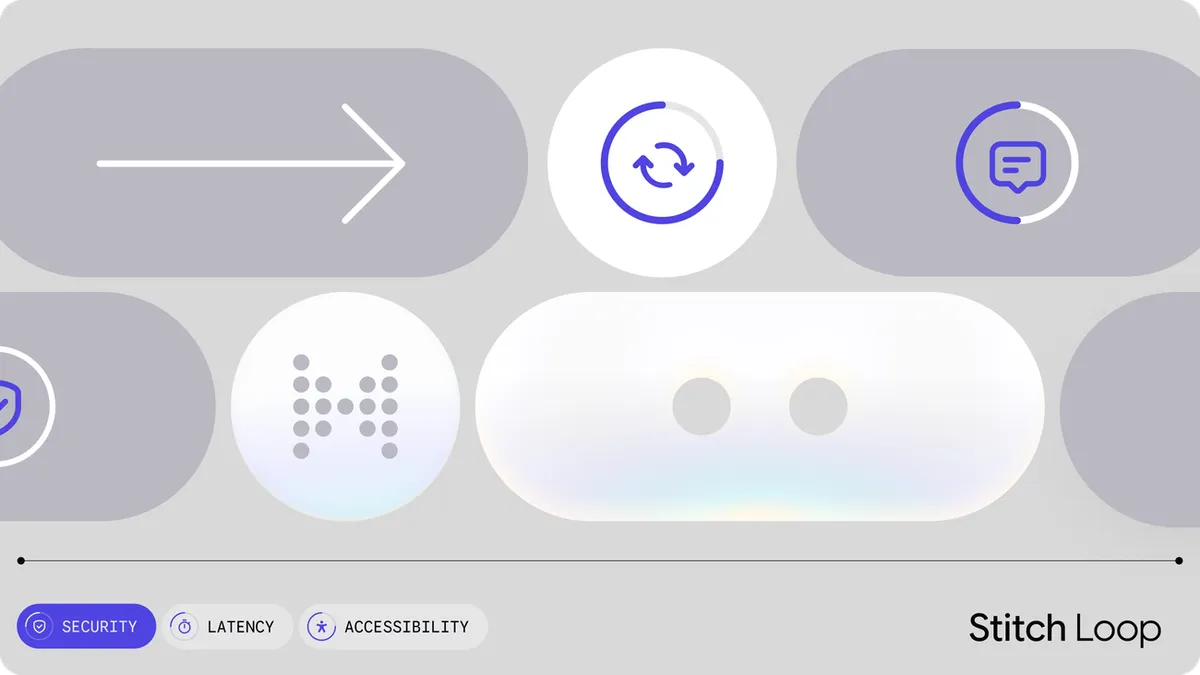
- Each loop runs four steps: suggestions, solutions, build (writing code in an isolated cloud sandbox and opening a GitHub PR), and reflect (watching live data, and continuing to watch once the goal is met).
- It ships with default loops for security, latency and accessibility, with the security loop pairing Gemini 4 Carbon and DeepMind's CodeMender; custom loops such as checkout conversion can be added.
- The waitlist is open globally, with Google AI Ultra users first; other coding agents can pull its product context through the Stitch CLI and MCP.
Builder's takeI run three products alone, and the stretch after launch is exactly what I lack time for: watching metrics, catching regressions, fixing small issues. Stitch Loop's design is worth copying: driven by measurable goals, opening PRs but never merging on its own. Until I get off the waitlist I would build a minimal version myself: have a coding agent read the error logs and conversion funnel once a day, allow it only to open PRs, and require evidence in each PR.
// Background · from #Google
Full timeline →- Nov 19 Google releases Gemini 4 Neon at $3 input and $15 output per million tokens, with 32% lower cost per task than Carbon at its default high level
- Nov 18 Gemini opens Tasks for free: it makes calls, shops and analyzes bills on Gemini 4 Hydrogen, paying through AP2 with a hard spending cap
- Nov 17 Google models GKE costs for agent sessions: parking idle sandboxes with Agent Substrate saves 40% of the node bill for 100 coding agents at 2 prompts an hour