Claude Fable 5.2 launches at a lower price, Google adds two TPU systems, AWS puts agent code in hardware-isolated sandboxes
Today's thread: as the top models get stronger, the layer that runs them is being rebuilt too. Anthropic cuts its top tier's price by a fifth, while Google's confidential-inference TPU, AWS's Nitro Sandboxes and GitHub's log secret scanning all address where model-written code and model-handled data run, and what happens when something leaks.
Fable and Mythos are the same underlying model: Fable carries cybersecurity and biology safeguards and is open to all users, while Mythos is by application through the Cyber or Life Sciences Verification Programs.
Pricing is $8 per million input tokens and $40 per million output tokens, with output up to 30% faster than 5.1; an optional fast mode adds up to 2.5x speed at $16 and $80.
On FrontierCode 2.0 it scores 49.1% at Xhigh effort, the highest of any released model Anthropic tested; at High effort it scores 45.3%, level with Opus 5.5's best of 45.5%, for roughly half the cost per task.
Anthropic recommends starting everyday coding and knowledge work on Opus 5.5 and moving up to Fable or Mythos, or down to Sonnet 5.5 or Haiku 5.5, as the task requires; it is available today on all platforms, including AWS, Google Cloud and Microsoft Azure.
Builder's takeI would not switch wholesale: keep Opus 5.5 as the default and route only the long tasks Opus keeps failing to Fable 5.2 at High effort, which by Anthropic's numbers is cheaper per task anyway. It is the same idea as my model-routing checklist on the blog: tier by task first, then look at unit price.
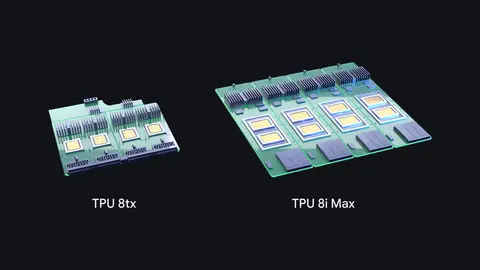
TPU 8tx uses the same silicon as 8t with 5th Generation AMD EPYC hosts and protects data and model weights in hardware while in use, with up to 2x lower latency than 8t and a near-zero performance penalty.
TPU 8i Max packages two 8i chips together, doubling compute, SRAM and HBM bandwidth over 8i, and fits twice the silicon in the same rack footprint.
It is the first time Google has introduced four TPU systems in one year; the TPU business has nearly 100 customers, including frontier labs, trading firms and retailers.
Builder's takeFor most people building products this is not hardware to buy but a signal: encryption while data is in use is becoming a standard option for cloud inference. If you run something like an AI cloud drive over users' private files, add a confidential-inference line to your compliance checklist and evaluate it once it is offered on demand.
Each workload gets its own VM managed by the Nitro Hypervisor at near-native EC2 performance, so untrusted, multi-tenant or regulated workloads can share one instance safely.
Cryptographic attestation means secrets are released only to Nitro Sandboxes that have proven their integrity.
In EKS or ECS it is a one-line change, with Pod Identity, VPC CNI, EBS, EFS, S3 and CloudWatch working as usual; on EC2 you can bring your own AMI and VMM, with Amazon Linux and Firecracker supported natively.
It is available on most Nitro-based EC2 instances in all commercial regions at no additional charge.
Builder's takeRead with the 11-07 item on Claude Code running one microVM per task on AgentCore, and the default isolation unit for agent code is moving from containers to VMs. If your backend runs model-written scripts, as PandaClaws' data processing does, move those jobs to a separate node group on Nitro Sandboxes first, then see whether secrets can be released by attestation.
When a workflow run completes, GitHub scans its logs for provider patterns; findings land in the repository's secret scanning alert list with a link back to the log, and validity checks run for supported types.
It is for GitHub Enterprise Cloud enterprises with GitHub Secret Protection or Advanced Security; the policy is off by default and enterprise owners enable it under Policies, then Advanced Security.
Only runs completed after enabling are scanned, with no backfill; generic patterns, custom patterns, AI-detected secrets and secrets already masked by Actions are not detected, and alerts send no notifications during the preview.
Builder's takeAgents increasingly run commands and print environments inside CI, and logs are where secrets leak most easily. If you qualify, turn it on now, and since the preview sends no notifications, have someone check the alert list on a schedule; if you do not, at least audit which jobs echo env into their logs.
It takes image, video and text in and produces text; the language backbone interleaves Mamba-2 and MoE layers (512 routed experts, 22 active per token), includes an MTP head for speculative decoding, and is licensed under OpenMDW 1.1.
JumpStart offers two variants: NVFP4 at about 75 GB, defaulting to ml.g7.24xlarge, and BF16 at about 249 GB on ml.p5en.48xlarge.
In AWS's test, the BF16 variant averaged 140.85 output tokens per second per request, and time to first token stayed around half a second across all three configurations.
NVIDIA positions it for document intelligence, GUI understanding for computer-use agents, video question answering and multimodal agentic applications.
Builder's takeLike Kimi K3.1 Pro landing on Bedrock on 11-08, large open models keep reaching cloud catalogs faster. For scans and screenshots in the AI Cloud Drive, I would compare the NVFP4 variant against the current closed model on my own samples for accuracy and cost per page before moving any traffic.
Take Qwen3.5-122B: 256 experts in each MoE layer, only 8 used per token, and 95% of its roughly 250 GB of parameters sit in expert MLPs.
HOPE is a second-order method that accounts for pairwise expert interactions; against 4 first-order baselines on Qwen3.5-122B, Qwen3.5-35B and GLM-4.5-Air, it achieved the best average rank of 2.07 across 5 methods and the top finish in 39% of conditions.
Its advantage grows with the pruning rate, up to +6.1% on agentic coding tasks over the next-best method; at 10% to 20% pruning, first-order methods are sometimes competitive.
A package runs it in three steps, calibrate, solve and prune, and has been tested on Qwen3, Qwen3-Next, Qwen3.5 and GLM-4.5.
Builder's takeWorth a try if you self-host an MoE open model and are memory-bound: calibrate on real traces from your own product (the paper used SWE-Bench trajectories), prune 40% to 50%, stack quantization on top, and validate on your own eval set rather than public leaderboards.
The new modes come through AgenticRetrieveStream: single-shot RAG searches once and has a foundation model answer from the passages it finds, while retrieval-only returns the matching passages without an answer.
The existing agentic retrieval breaks a question into sub-queries, checks whether the results are enough and, if not, searches again within a configured iteration limit, retrieving a full document when a passage lacks context.
AWS's example is an internal banking policy assistant: single-shot RAG for an account-opening checklist, agentic retrieval for comparing policies across business types.
Builder's takeMatching retrieval effort to question difficulty is something I have wanted in the AI Cloud Drive's document Q&A. You can copy the structure off AWS too: a cheap classifier decides whether to go multi-step, and a separate source-only entry point lets users check passages without waiting for generation.
Control Room is a central system that tracks model workloads across OpenAI's research infrastructure.
It can rapidly stop those workloads when safety or security concerns arise.
Builder's takeRead with OpenAI bringing in Hacktron to test its own systems on 11-08, and security work is spreading from the model to the infrastructure that runs it. At my scale a dedicated system is overkill, but every long-running agent job should sit in one list with a one-click stop, so nobody has to hunt for processes on a machine.
ChatGPT Enterprise can now be bought through AWS Marketplace.
The aim is to simplify procurement through organizations' existing AWS purchasing and billing relationships.
Builder's takeClaude Fable 5.2 reached AWS the same day, and Daybreak Red entered AWS GovCloud on 11-05: model vendors now compete on whether they ride the customer's existing cloud bill, not just on capability. If you sell AI features to enterprises, ask about their committed cloud spend when you quote; drawing it down is often an easier sell than a discount.
In AI Studio you describe a real-world idea to Gemini and enable Google Maps with no credit card, or let AI Studio detect and link an existing Google Cloud project.
AI Studio connects the key securely and loads a live, interactive preview.
It is free up to daily quotas, which reset every 24 hours; production requires a paid Cloud billing account.
Builder's takePrototyping tools now compete on which real data sources come pre-wired. To test a location-based idea, you can put a clickable prototype in front of users within half an hour in AI Studio, but do not ship the generated code as is: set up keys and quotas under your own project before launch.
Researched and drafted with AI assistance; editorial standards and views set by Darius.
Every Monday, the week in AI in one email
Every Monday morning: the 6 AI stories that mattered most in the past seven days, with my take, in your inbox.
Your email is only used to send the weekly and is never shared. Every email has a one-click unsubscribe link. See the latest issue →