Google finds stale TODOs cost agents 77% more tokens, Copilot adds assisted approval for tool requests, Cursor lets you talk to agents by voice
A quiet weekend, and the thread is the day-to-day operation of agents: one stale comment in context can add 70% to the cost, while approval rules, permission policies and usage definitions become configuration you can write down and review. Real numbers from a security operations team show that tiered human sign-off matters more than full automation.
The data is distributed traces from thousands of engineers covering hundreds of millions of agent steps; nearly 1 in 7 sessions (13%) meet a bug-referencing TODO or FIXME comment
Agents ignored the comment in 94% of encounters; in 6% they acted on the referenced bug, 83% of those unprompted, and 41% of unprompted detours chased closed tickets
A regression (all p<0.0001) puts the overhead at 70% more steps, 77% more tokens and 105% more wait time per session
Cleanup agents checked bug and file history before proposing deletions; over six months they removed thousands of obsolete references with over 95% reviewer acceptance
Builder's takeThis is the cheapest agent cost cut I have seen this year: no model change, just clear out stale comments. I would add a presubmit check to the PandaClaws and AI Cloud Drive repos that flags TODOs pointing at closed tickets, let an agent verify them, and keep every deletion behind human review.
In the Copilot app you can set up Agent Merge from a pull request so Copilot merges it when ready; it stays enabled while required checks or rules are pending
Assisted approval: give Copilot guidance on which tool requests to approve automatically; personal instructions are opt-in and apply to local sessions only
When a conversation hits its context limit you can compact it or review what uses space from the error; Copilot CLI adds a /settings dashboard for plugins and MCP servers
VS Code 1.145 schedules local automations with cron expressions and can use custom agents from your workspace
Builder's takeAssisted approval turns each confirmation pop-up into a policy you can write down, which is the right direction, but I would start by auto-approving read-only tools only (search, read files, run tests) and keep writes and network calls manual. Review that guidance alongside the repo's permission config instead of leaving it in personal settings.
Hold a realtime voice call with agents in the Agents Window, the IDE, web and Cursor for iOS; on iOS, "Hey Siri, call Cursor" starts one
The voice agent handles the conversation and passes coding work to the agent in your chat; while it runs you can ask what changed in a diff, check on a run or search earlier messages
It runs on xAI's Grok Voice, and with Privacy Mode on voice chat has zero data retention
It is separate from dictation (formerly Voice Mode), which only turns speech into text; voice chat is a two-way conversation
Builder's takeVoice fits fragmentary moments like checking progress or asking what changed, not specifying complex work. Read alongside the 11-08 Slack and Teams item, coding agents are becoming colleagues you can reach anytime; I would use it to check background runs away from the desk and keep the requirements themselves in writing.
Roughly 3,000 to 4,000 alerts a month from four sources: dark web breach cards, identity and access anomalies, infrastructure alerts and financial risk events
A Tier 1 supervisor orchestrates more than 30 specialized agents for triage; about 10% of cases needing multi-step reasoning go to a Tier 2 supervisor that correlates 3 to 5 data sources into an investigation report
Autonomous resolution went from 0% to 83% with Tier 1 and more than 90% with both tiers, escalations fell below 10%, routine triage dropped from 15–30 minutes to seconds, and AWS estimates 900 to 1,800 analyst hours avoided per month
A 30-day rolling episodic memory spots recurring patterns; a pattern counts as confirmed only after it is resolved the same way three times; high-risk cases go to humans with the full evidence chain
Builder's takeThe thing to copy is not the 90% but two rules: a pattern counts only after three identical resolutions, and risk tiers decide who signs off. I would apply the same to anomaly review in our interview product: low risk passes automatically, medium gets flagged, high goes to a person with the evidence attached.
All agent traffic goes through one AgentCore Gateway whose inbound authorizer accepts only ID-JAGs issued to that agent; token exchange moves to the Gateway, so the agent's execution role no longer needs exchange or secret permissions
AgentCore Policy runs Cedar in ENFORCE mode, default-deny, binding each tool to the agent's client ID and delegated scope (for example xaa:write) before any tool runs; denied calls never redeem the ID-JAG
A second reporting agent on Amazon EKS has its own Okta registration and only xaa:read; OpenTelemetry spans cover every hop and Okta's System Log streams to CloudWatch via EventBridge
The additions take about 90 minutes; the EKS control plane costs $0.10 per hour plus nodes and other usage; the authors say the code shows the pattern and is not for production
Builder's takeI like that a denied call never even redeems a token: deciding permission before fetching credentials keeps exposure minimal. Our PandaClaws multi-platform publishing agents should split the same way, with separate identities for publishing and reading data and one gateway enforcing default-deny tool policy, instead of each agent carrying its own checks.
Requests pass Route 53, a public load balancer with AWS WAF and Amazon Cognito authentication before reaching the MCP server on Fargate in private subnets, which is not reachable from the internet
Three tool groups: SQL through Athena and Redshift, semantic search over docs and table metadata in Bedrock Knowledge Bases, and search over operational policies
Athena tools allow only SELECT and reject writes; every tool call is logged to CloudWatch as structured JSON; session state lives in DynamoDB so Fargate tasks stay stateless
Onboarding a dataset takes one JSON metadata file and no custom code; the lake holds thousands of datasets, and end-to-end latency in testing was 15 to 20 seconds
Builder's takeSELECT-only SQL plus a JSON log for every call is the minimum bar for giving agents data access, and worth copying as is. If we open AI Cloud Drive's storage dashboard to agent queries I would build it this way, but 15 to 20 seconds of latency fits analytical Q&A, not paths where a user is waiting.
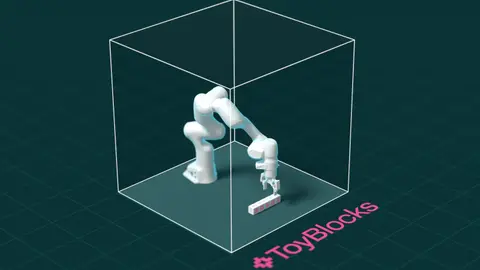
Released: simulation assets, task and demonstration generators, training and evaluation code, validation sets, and two models, Molmo2-4B-tb and maniflow-tb; the data has 85,336 long-horizon demonstrations and about 144 million frames
With Claude Opus 5.5 as the agent, 63% of search-and-spell tasks were solved or correctly declared infeasible; learned skill descriptions raised success from 24% to 63%, versus 36% for expert-written ones
Adding 100 world-model rollouts raised a policy's success in an unseen region from 19% to 78%; ManiFlow's atomic skills scored 80.0% in simulation and 81.1% on a real robot
The authors say action models still generalize poorly to new spatial layouts and frontier models still misread letter orientation; a larger second release is planned within weeks
Builder's takeI don't build robots, but the finding that learned skill descriptions beat expert-written ones matters to anyone writing tool descriptions for agents: let the model rewrite them from real call results, then compare on an eval set. I would try one round on PandaClaws' tool descriptions.
Users describe an idea, such as a holiday gift tracker or a daily word game, and Muse builds it; they can keep asking it to add pieces, change the look or change how it works
Spaces can go in the sidebar or main tabs, be hidden, or be scheduled, for example a weekly planner on workdays that switches to weekend plans on Saturday
Connected apps let a space update in the background, such as new concert dates or price changes, and users can check off items, add notes and edit inside it
Spaces launched everywhere Muse is available; Meta is exploring shared spaces for collaboration and rolling out specialized models trained with learnings from Muse Wonder
Builder's takeFor anyone building tool products this is a signal: users will start expecting the product to grow an interface on the spot from a request. I won't chase the whole format, but in AI Cloud Drive I would try a narrow slice first, a one-sentence custom dashboard for one kind of file, and decide based on retention.
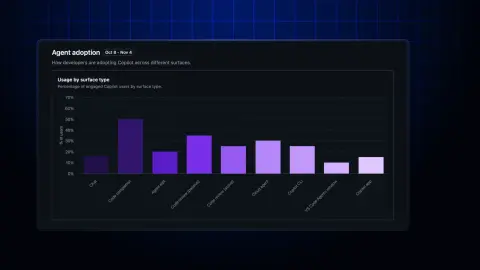
The agent adoption chart adds Copilot Chat and the VS Code Agents window for nine Copilot experiences; enterprise and organization 28-day reports include them, and the API gains chat and vscode_agent entries
A user counts as engaged after using a feature on at least two days in 28; chat includes agent mode, so users who make agent edits also count under chat
"Passive users" are renamed "Chat-first users"; chat and the Agents window don't count toward adoption phases, so cohort sizes don't change
Enterprise owners, billing managers, organization owners and custom roles with View Copilot Metrics can access it, with the usage metrics policy enabled
Builder's takeTogether with the 11-07 code review addressed rate, GitHub is breaking "how much" into "how". I would borrow the two-days-in-28 definition of engagement for our own agent usage stats, so one-off tries don't inflate the numbers.
Researched and drafted with AI assistance; editorial standards and views set by Darius.
Every Monday, the week in AI in one email
Every Monday morning: the 6 AI stories that mattered most in the past seven days, with my take, in your inbox.
Your email is only used to send the weekly and is never shared. Every email has a one-click unsubscribe link. See the latest issue →