Google adds TPU 8tx for confidential inference and TPU 8i Max, which packages two 8i chips to double compute, SRAM and HBM bandwidth
The eighth TPU generation reaches its fourth system in a year, one aimed at confidential computing and one at very long context. What each new system is for.
// Key points
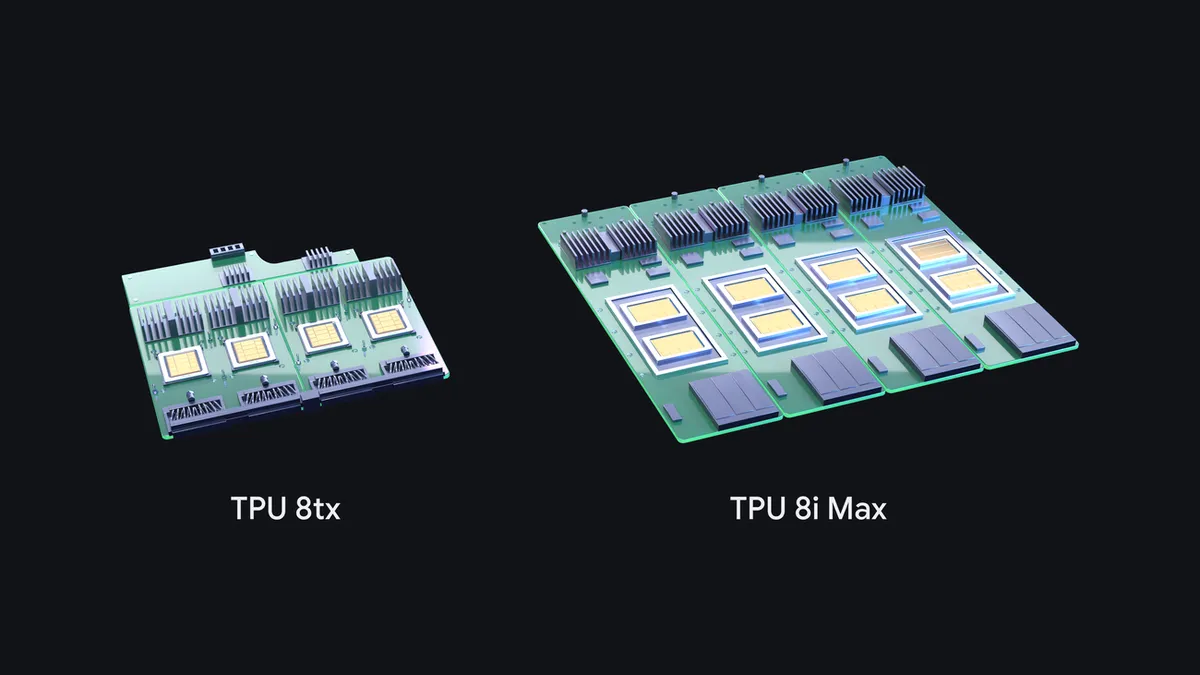
- TPU 8tx uses the same silicon as 8t with 5th Generation AMD EPYC hosts and protects data and model weights in hardware while in use, with up to 2x lower latency than 8t and a near-zero performance penalty.
- TPU 8i Max packages two 8i chips together, doubling compute, SRAM and HBM bandwidth over 8i, and fits twice the silicon in the same rack footprint.
- It is the first time Google has introduced four TPU systems in one year; the TPU business has nearly 100 customers, including frontier labs, trading firms and retailers.
Builder's takeFor most people building products this is not hardware to buy but a signal: encryption while data is in use is becoming a standard option for cloud inference. If you run something like an AI cloud drive over users' private files, add a confidential-inference line to your compliance checklist and evaluate it once it is offered on demand.
// Background · from #Google
Full timeline →- Nov 10 Google AI Studio now connects Google Maps Platform directly: no leaving the workspace for billing and credentials, free up to daily quotas
- Nov 6 Gemini Omni 1.2 Flash is generally available: 15-second video, multi-turn editing, and a 30% price cut to $0.07 per second at 720p
- Nov 4 Google DeepMind releases Cheminformatics Skills for Antigravity: in a lung-cancer drug case, an agent curates thousands of compounds and proposes macrocycles with synthetic routes in an hour