Coding agents
What Claude Code, Codex, Copilot, Cursor and similar tools can and can't do. Every brief item about Coding agents, newest first, each with its primary source.
Timeline 115 items
-
Oct 22 · Thu · 2 items
- Tools github.com ↗Claude Code 2.1.307 emits an OpenTelemetry event each time a safety layer stops, prompts or sends back a tool call
Take · Building on the OpenTelemetry export that entered beta on October 14, I'd count safety_event by rule: a rule that prompts constantly is too tight, one that never fires may be doing nothing, which is the same point as my post on scaling agent autonomy with reversibility. If you run your own MCP server, like the one behind AI Interview, make write tools idempotent or mark them clearly instead of relying on the client to deduplicate.
From the Oct 22 brief · item 05 → - Tools github.blog ↗GitHub CLI v2.103.0 can use expiring, auto-refreshing OAuth tokens, so a leaked token stops working within hours
Take · On dev machines and cloud sessions where agents run gh, I'd turn this on first; like the package firewall, it shrinks the blast radius of the credentials an agent holds. Before you do, search your scripts for places that write the output of gh auth token to a file or environment variable, and change them to fetch it each time.
From the Oct 22 brief · item 06 →
-
-
Oct 21 · Wed · 2 items
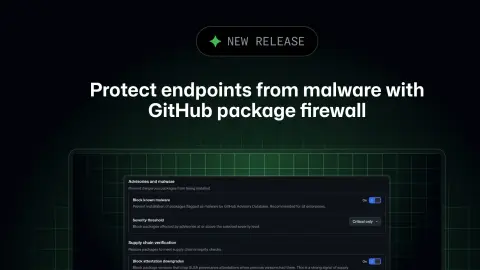
- Safety github.blog ↗GitHub package firewall enters public preview, screening npm traffic between coding agents, CI and the registry
Take · Coding agents install dependencies on their own, inside environments that hold secrets, and that's the most overlooked gap. Even without GitHub Enterprise, I'd do two things now: set a cooldown so npm doesn't pull versions published a few hours ago, and never inject production credentials while an agent is installing packages.
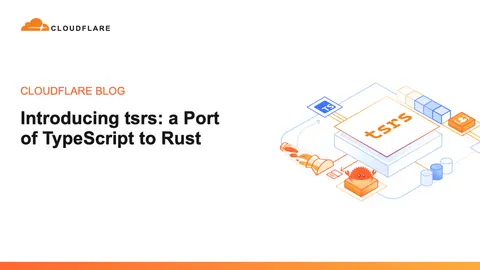
From the Oct 21 brief · item 03 → - Open source blog.cloudflare.com ↗Cloudflare and VoidZero introduce tsrs, a Rust port of the TypeScript compiler up to 8x faster than TypeScript 7.0 with about 70% less memory
Take · What I'd learn from most is the maintenance method: agents track upstream daily and a compatibility matrix runs nightly, which is what keeps an AI port from rotting. tsrs itself is experimental; I'll run it alongside tsc in CI on one large repo to compare time and diagnostics, without replacing the real type check.
From the Oct 21 brief · item 04 →
-
-
Oct 20 · Tue · 5 items
- Tools blog.cloudflare.com ↗Cloudflare cuts the average cost of its internal AI code review 68%, from $2.43 to $0.77
Take · Anyone building agents should read this line by line: the first cost cut isn't a cheaper model, it's moving the parts of the prompt that change to after the cache breakpoint. I'll run the same check on PandaClaws' generation chain and look at first-request cache hit rate; as I worked out in What Does It Cost to Keep Three AI Products Online Every Month?, structural mistakes are what inflate model bills.
From the Oct 20 brief · item 01 → - Tools github.blog ↗GitHub opens a Copilot model policy REST API at enterprise, team, app and organization level, generally available
Take · Model turnover is now monthly, and Copilot retired a batch of old models the same day; flipping switches by hand will eventually miss something. I'd keep the model allowlist in a config repo, sync it through this API on a schedule, and open new models to one pilot team first.
From the Oct 20 brief · item 05 → - Tools github.blog ↗Copilot retires six models including GPT-5.5 and GPT-5.4 on October 19, pointing users to GPT-6.1 Sol and GPT-6 Luna
Take · Together with the mid-November retirement notice on 10-16, Copilot is swapping models twice in a month. If scripts or extensions hard-code model names, check them today; the sturdier pattern is to name a tier (strong / fast) and keep model names in one config.
From the Oct 20 brief · item 06 → - Tools github.blog ↗GitHub: during unusual traffic, some anonymous HTTPS clones of public repositories may temporarily require authentication
Take · Coding agents that git clone dependency repos the moment a sandbox starts are exactly the traffic this will hit. I'd give every automated clone one read-only GitHub App token, and add a backoff retry in the agent's tool layer so a temporary block doesn't fail the whole run.
From the Oct 20 brief · item 07 → - Research openai.com ↗OpenAI details work on improving ChatGPT in low-resource programming languages, with new evaluations for software engineering, SQLite and COBOL migration
Take · Worth watching if you deal with legacy systems: COBOL migration making it into an official evaluation means vendors now treat it as a real use case. Don't wait for leaderboards; take a slice of your own legacy code, translate it and run the existing tests, since the pass rate says more than any score.
From the Oct 20 brief · item 08 →
-
-
Oct 18 · Sun · 2 items
- Model release huggingface.co ↗DeepSeek releases V4.1-Flash-1017 under MIT: DeepSWE v1.1 rises from 74.2 to 77.0 and Terminal-Bench 4.0 from 31.2 to 42.3
Take · Put it next to Beam on 10-17 and Muse Spark Open on 10-16 and open coding models closed in on closed ones all week. I'd point Claude Code at it on a batch of real tasks from my own repos, checking whether shorter outputs still mean complete changes; note the missing Jinja template before self-hosting, and don't force a generic one onto it.
From the Oct 18 brief · item 01 → - Tools blog.cloudflare.com ↗Cloudflare and VoidZero open-source Void, an SDK, CLI and shared platform that deploy Vite apps, vibe-coded internal ones included, to Cloudflare
Take · Once coding agents are everywhere, the bottleneck moves from writing the app to who hosts it and who controls access. Void's answer is a shared platform with resource limits, giving prototypes from non-engineers a safe place to land. This site runs on Astro, so I'd try its Astro integration on a small internal dashboard and check what it provisions before rolling it out.
From the Oct 18 brief · item 06 →
-
-
Oct 17 · Sat · 4 items
- Open source huggingface.co ↗Reflection opens Beam under Apache 2.0: a 501B-total, 23B-active MoE for coding and agents with a 1M context
Take · Compared with Muse Spark Open on 10-16, Beam’s big difference is a stated Apache 2.0 license, which makes it the first frontier-class open coding model I’d put on a self-hosting shortlist. Four B200s means it’s only for teams with the hardware; I’d first run it through an inference provider on real tasks from my own repos, compare per-task cost with closed models, then decide whether to host it.
From the Oct 17 brief · item 01 → - Tools github.com ↗Claude Code 2.1.302 turns on fork subagents by default in claude -p, the Agent SDK, the desktop app and VS Code, and warns that standalone Claude Design closes by December 14
Take · My PandaClaws content pipeline runs on claude -p, so with these defaults changing I’d run it in staging before upgrading and check subagent concurrency and usage. If you’re on a third-party provider, make sure your scripts set --permission-mode explicitly so nothing silently stalls waiting for approval. If you use standalone Claude Design, export your work before December 14.
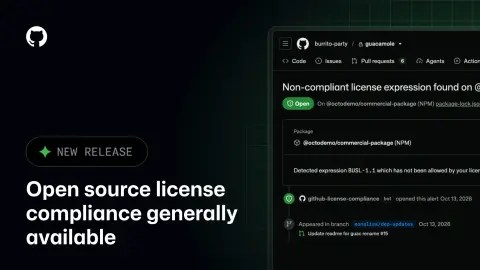
From the Oct 17 brief · item 02 → - Tools github.blog ↗GitHub open source license compliance is generally available, with a new API that lets coding agents check packages against the enterprise license policy
Take · Coding agents easily pull in a GPL dependency on the way, and getting blocked at the PR wastes a round. The API’s value is moving the check earlier: I’d add a check-license tool to the agent’s toolset and call it before choosing a package. Teams not on GHEC can follow the same idea with a license allowlist in their own agent.
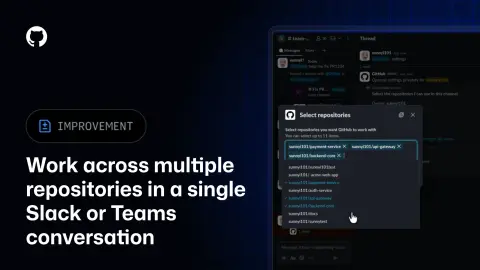
From the Oct 17 brief · item 06 → - Tools github.blog ↗@GitHub in Slack and Teams now works across multiple repositories in one conversation and can use shared Slack messages and threads as context
Take · My products are multi-repo microservices, and checking PRs across repos is the most time-consuming daily chore, so this fits a pre-standup progress summary directly. Note that reading Slack threads as context brings chat content into Copilot’s scope, so admins should decide which channels allow that before turning it on.
From the Oct 17 brief · item 09 →
-
-
Oct 16 · Fri · 3 items
- Tools github.blog ↗Copilot will retire Claude Opus 4.8, Claude Opus 5 and GPT-5.6 Terra on November 16
Take · Two things to do now: search your repos for Copilot configs, custom agents and scripts that hard-code these three model names; and if your org turned off default enablement, turn the replacements on by hand, or after November 16 there will be nothing to fall back to. Before switching, compare old and new models on one or two real tasks for output and usage.
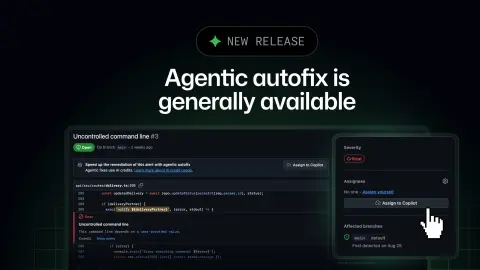
From the Oct 16 brief · item 05 → - Tools github.blog ↗Code scanning alerts can be assigned to Copilot, which reruns CodeQL to verify and opens a draft PR, up to 25 alerts at a time
Take · Rerunning the scan to prove the alert is closed is the part I value most: it gives agent fixes a verifiable definition of done for the first time. But it replaces the free Generate Fix and bills AI Credits plus Actions minutes, so I’d batch-assign a set of low-risk old alerts first, check PR acceptance and cost per alert, and then decide whether new alerts go to it by default.
From the Oct 16 brief · item 07 → - Tools github.com ↗Codex CLI 0.163.0 lets you steer mid-response, runs read-only tools in parallel and checks network permission before DNS lookups
Take · If you run Codex in CI, upgrade for the three network proxy fixes rather than the features: a DNS lookup can leak information on its own, and a credential-alias bypass is worse. Also, resuming a thread now brings back its network approvals, so after upgrading check which domains old threads had approved.
From the Oct 16 brief · item 08 →
-
-
Oct 15 · Thu · 2 items
- Tools github.com ↗Claude Code 2.1.299 compacts 200K+ token conversations after about 54 idle minutes, before the one-hour prompt cache expires
Take · Idle compaction saves real money: coming back from a meeting to a large conversation used to mean paying full price to reread the context. I’d move the team to 2.1.299 mainly for the --plugin-dir sandbox fix, and raise the threshold for long tasks that need their context verbatim so compaction doesn’t drop details.
From the Oct 15 brief · item 02 → - Tools github.blog ↗Copilot updates its multi-model orchestration HydraFusion and adds HydraFusion Max for demanding tasks
Take · Cheap drafts, expensive review, and repair only when needed is a split you can copy in your own agents. I’d try the same structure in PandaClaws content generation, with a mid-tier model drafting and a strong model only checking, but I wouldn’t switch Max on by default for the team until GitHub publishes its billing.
From the Oct 15 brief · item 03 →
-