Google Threat Intelligence: attackers now use autonomous LLM frameworks to scan software updates, work out the patched flaw and build an attack without human involvement
GTIG's latest AI Threat Tracker says no human is needed between a patch release and its exploitation. The technique observed and Google's response, for teams running internet-facing services.
// Key points
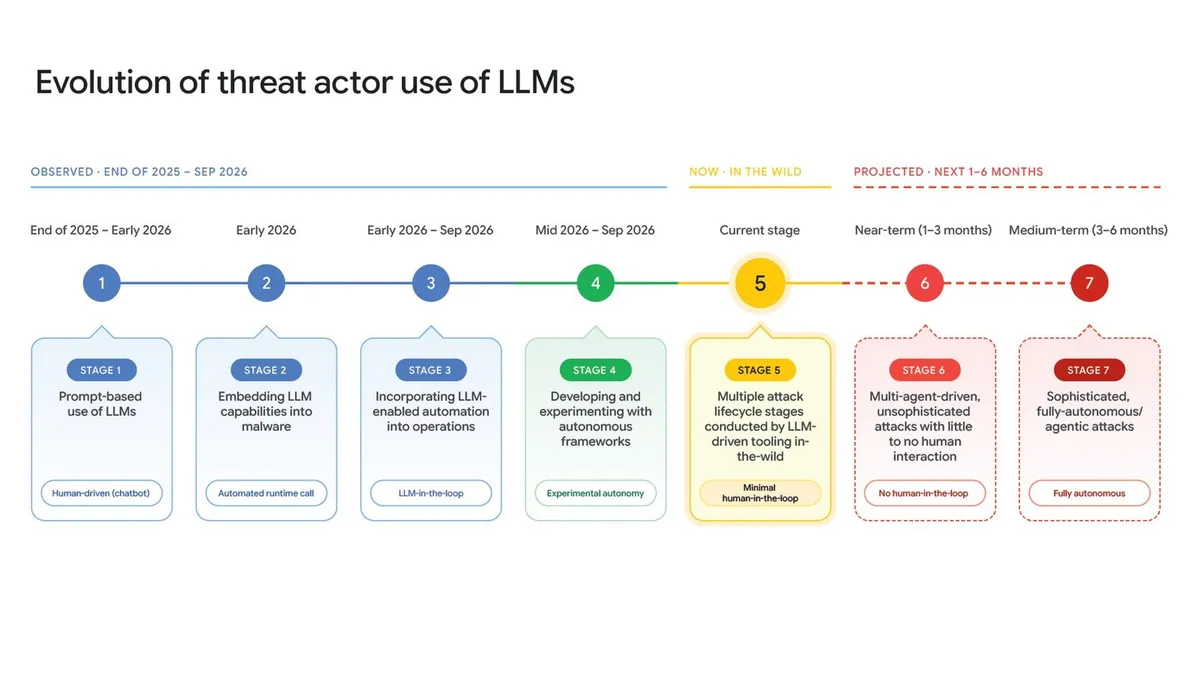
- According to GTIG's latest AI Threat Tracker report, attackers use autonomous LLM frameworks to continuously scan software updates, figure out which flaw was patched and build an attack for it, all without human involvement.
- Google's response is Google AI Threat Defense, combining Gemini and other frontier models, Wiz's context and prioritization, CodeMender's automated patching and Mandiant's expertise to find and fix flaws continuously.
Builder's takeRead with the 11-14 item where Cloudflare saw requests from AI penetration testing orchestrators rise 30x since October 1: patches now get taken apart automatically as soon as they ship. I would move security updates from a monthly batch to same-day merges, starting with internet-facing services.
// Background · from #Google
Full timeline →- Nov 17 Google models GKE costs for agent sessions: parking idle sandboxes with Agent Substrate saves 40% of the node bill for 100 coding agents at 2 prompts an hour
- Nov 17 Gemini Notebook can turn sources into interactive sites: type "make me a site" to build explainers, dashboards or trackers
- Nov 16 Google details results from Antigravity's /teamwork multi-agent system: a two-week campaign rewrote the rest of the Zircon microkernel into about 800,000 lines of safe Rust, and the tools are open to outside developers