Gemini models and the Gemini API, Gemma open models, and Google’s developer tools for agents. Every brief item about Google, newest first, each with its primary source.
Timeline 39 items
-
Nov 11 · Wed · 3 items
- Research deepmind.google ↗DeepMind introduces AlphaProof Code: agents generate over six million lines of Lean to formally verify Signal's protocol implementation in four weeks
Take · For most product teams this is not a tool for tomorrow, but the split of humans writing specs, agents writing proofs and a machine checking them is worth learning now. I would try having a coding agent write Lean or property tests for a small, high-stakes module like auth or billing, with humans reviewing only the spec. Read with Microsoft's PDD-Kit on 11-06, agents are lowering the bar for formal verification.
From the Nov 11 brief · item 02 → - Model release deepmind.google ↗DeepMind releases Gemini Robotics 2.5: 30% to 100% higher success across 200 tasks, and 96% success picking parts on Mercedes-Benz lines
Take · We do not build hardware, but two things are worth noting. "Real workplace plus a stated success rate" is becoming the standard for launches, and we should report agent capabilities to customers the same way. And jailbreak benchmarks now cover physical actions, so any agent that triggers real-world actions should have a test set of disguised requests.
From the Nov 11 brief · item 10 →
-
-
Nov 10 · Tue · 2 items
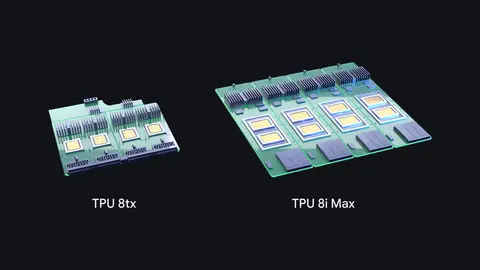
- Industry blog.google ↗Google adds TPU 8tx for confidential inference and TPU 8i Max, which packages two 8i chips to double compute, SRAM and HBM bandwidth
Take · For most people building products this is not hardware to buy but a signal: encryption while data is in use is becoming a standard option for cloud inference. If you run something like an AI cloud drive over users' private files, add a confidential-inference line to your compliance checklist and evaluate it once it is offered on demand.
From the Nov 10 brief · item 02 → - Tools blog.google ↗Google AI Studio now connects Google Maps Platform directly: no leaving the workspace for billing and credentials, free up to daily quotas
Take · Prototyping tools now compete on which real data sources come pre-wired. To test a location-based idea, you can put a clickable prototype in front of users within half an hour in AI Studio, but do not ship the generated code as is: set up keys and quotas under your own project before launch.
From the Nov 10 brief · item 10 →
-
-
Nov 6 · Fri · 1 item
- Model release deepmind.google ↗Gemini Omni 1.2 Flash is generally available: 15-second video, multi-turn editing, and a 30% price cut to $0.07 per second at 720p
Take · At $0.07 a second a 15-second 720p clip is about a dollar, which puts short product videos within reach of a content tool's per-post budget. For PandaClaws I'd test the draft-low, edit, then upscale flow, since follow-up edits are where the real savings are, not the list price.
From the Nov 6 brief · item 07 →
-
-
Nov 4 · Wed · 1 item
- Tools deepmind.google ↗Google DeepMind releases Cheminformatics Skills for Antigravity: in a lung-cancer drug case, an agent curates thousands of compounds and proposes macrocycles with synthetic routes in an hour
Take · The transferable part is the split: let the model plan and pick tools, and push anything that must be exact into deterministic code. That's how I'd build extraction in AI Cloud Drive too: the model decides what to pull from a file, and a parser or validator produces the final fields. Packaging the know-how as a plugin also means domain rules ship separately from the model.
From the Nov 4 brief · item 06 →
-
-
Nov 3 · Tue · 1 item
- Industry deepmind.google ↗Google DeepMind's PlanAssist moves into a 12-month beta with UK councils after pilots cut officer assessment time by up to 58%
Take · The pattern worth copying is AI drafts with citations, a person signs, and the metric is the share approved without edits. Our AI Interview product fits the same shape: the evaluation report should cite the exact answers it relies on, and I'd track the no-edit rate as the main quality number instead of a model score.
From the Nov 3 brief · item 03 →
-
-
Oct 31 · Sat · 1 item
- Tools ai.google.dev ↗Gemini API's Computer Use tool is generally available across the Interactions and GenerateContent APIs, with Gemini 3.8 Flash as the recommended model
Take · GA means you can now talk about stability and SLAs, but the execution layer is still yours: get one fixed flow working with Playwright in a sandboxed container before wiring it into a product. The first thing I would do is turn on the prompt-injection check that ships off, and I would not casually use disabled_safety_policies to drop the confirmation policies; this fits last week's pattern of letting agents act while hard-coding the boundaries.
From the Oct 31 brief · item 01 →
-
-
Oct 29 · Thu · 2 items
- Model release deepmind.google ↗Google DeepMind announces Gemini 4 Carbon: first on the Artificial Analysis Intelligence Index at 59, going to cyber defenders first at $2/$10 per million tokens
Take · Carbon follows Argon's playbook: defenders first, developers later. Two things are worth doing now: keep the eval set you used for Argon so you can compare on the day the API opens, and budget at the $4/$20 list price, not the introductory one. For long-running background jobs like PandaClaws, nothing needs to change until there is API access.
From the Oct 29 brief · item 01 → - Tools ai.google.dev ↗Google releases the Gemini API CLI in beta: a zero-dependency command-line client for coding agents, scripts and CI
Take · Giving an agent a capability through a CLI instead of an SDK is the cheapest route, and it fits neatly into a skill. I would start with one-off CI jobs such as generating images; but pin the version with GEMINI_VERSION rather than piping the latest install script into bash, with the LiteLLM poisoning from 10-24 still fresh.
From the Oct 29 brief · item 10 →
-
-
Oct 28 · Wed · 1 item
- Model release deepmind.google ↗Google DeepMind unveils Genie 4, a natively multimodal world model that generates audio too, as a research preview for trusted testers
Take · With no resolution, duration or pricing, there is no way to judge product fit yet. I would join the API early-access waitlist and watch whether it becomes a per-second API the way Imagen and Veo did. Teams building games, teaching demos or simulation environments for agents can prepare a fixed set of evaluation scenes now and compare on day one.
From the Oct 28 brief · item 03 →
-
-
Oct 27 · Tue · 2 items
- Tools ai.google.dev ↗Gemini API now stores requests by default for new paid-tier projects using generateContent and related endpoints
Take · This hits new projects, so the likely victims are freshly created test or client projects. I would pass store=false explicitly in the call layer rather than rely on a console setting. For a product like AI Cloud Drive that handles people's private files, whatever the privacy notice promises has to be switched off in code to match.
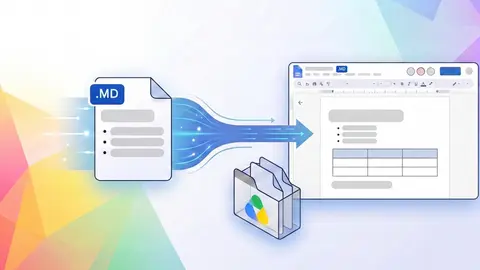
From the Oct 27 brief · item 06 → - Google Docs edits Markdown files natively and Drive previews them, aimed at humans and agents working together
Take · More and more agent-written plans and docs are Markdown, and reviewing them meant either reading diffs in Git or converting to Docs and back. Now non-technical colleagues can comment on the .md file itself in Docs. I will try this for PandaClaws long-form drafts, but the announcement says nothing about syncing with a Git repo, so getting files into the repo is still on you.
From the Oct 27 brief · item 07 →
-
-
Oct 26 · Mon · 1 item
- Research research.google ↗Google details TB screening in the field: a partner device has read 25,000 chest X-rays, and open MedGemma has passed 10 million downloads
Take · For anyone selling to enterprises or regulated industries this is more useful than a model launch: open weights plus local deployment solve the rule that data can't leave the country, not just cost. Selling to hospitals or governments, I'd put runs offline and fine-tunes on the customer's own machines on page one of the proposal.
From the Oct 26 brief · item 06 →
-
-
Oct 23 · Fri · 1 item
- Tools platform.claude.com ↗Claude Models on Google Cloud (Anthropic managed) launches: the Claude API run by Anthropic, reached through a Google Cloud project, with IAM for access and Marketplace for billing
Take · Put this next to the 10-22 item on OpenAI models coming to Google Cloud: within a week Google Cloud has both vendors' APIs on its shelf. If your team has committed GCP spend, you can now move Claude onto that bill too, but this is a new organization: workspaces, skills and usage history in your existing org don't come along, so make an inventory before migrating.
From the Oct 23 brief · item 02 →
-
-
Oct 22 · Thu · 1 item
- Industry openai.com ↗OpenAI's frontier models and Codex workflows are coming to Google Cloud through Model Garden and Google Cloud Marketplace
Take · Together with AWS serving GPT-6 Sol and Luna in five Asia Pacific Regions since October 12, OpenAI can now be bought through two major clouds' bills. If your company has committed spend on Google Cloud, wait for pricing, regions and the feature list, then compare with the direct API, especially whether newer features like 12-hour caching show up there. Keep a model-provider abstraction so switching channels doesn't touch business code.
From the Oct 22 brief · item 03 →
-
-
Oct 20 · Tue · 1 item
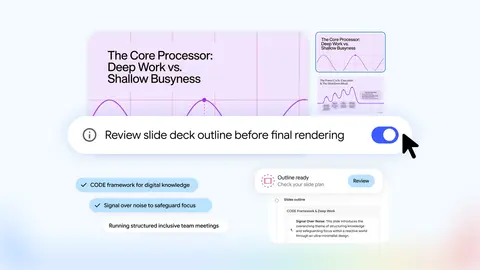
- Tools blog.google ↗Gemini Notebook lets users review an outline before Slide Decks and Video Overviews render, rolling out globally over the next week
Take · The more expensive and slow the output (video, long articles, whole decks), the more it deserves a cheap confirmation point before rendering. I plan the same change for long-form generation in PandaClaws: show an outline for a nod before writing the body; I covered how to design that step in Designing Fallbacks and Human Confirmation Into Agent Systems.
From the Oct 20 brief · item 09 →
-
-
Oct 14 · Wed · 2 items
- Model release blog.google ↗Google releases Gemini 4 Argon at an introductory $2/$10 per million tokens until November 30, then $4/$20, with a 1M unified input-output limit
Take · The introductory price is the real news: for seven weeks a frontier model costs half its list price, so this is the cheapest window to run it against our own evals. I’d put Argon through the scoring prompts behind the AI interview product now, but write the comparison at the $4/$20 list price, because that is what production will pay after November 30.
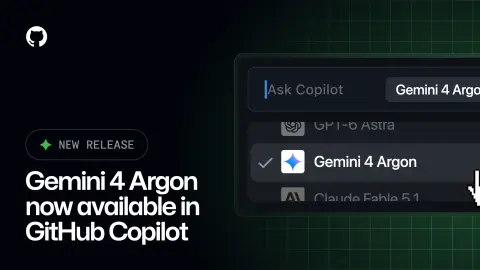
From the Oct 14 brief · item 01 → - Tools github.blog ↗Gemini 4 Argon is generally available in GitHub Copilot, billed at provider list price and on by default for Business and Enterprise unless admins turn it off
Take · “On by default, billed at list price” is the line team leads should read. If you run Copilot Business, decide this week whether Argon goes on the allow list, and set a budget before people find it in the model picker. Pair it with the 10-10 change that lets code review be billed to the organization: model choice is now a cost line, not a preference.
From the Oct 14 brief · item 02 →
-