AI agents
Putting agents to work: evaluation, reliability, tool use and cost. Every brief item about AI agents, newest first, each with its primary source.
Timeline 128 items
-
Oct 30 · Fri · 2 items
- Tools aws.amazon.com ↗AWS Step Functions workflows can now be called as AI agent tools, exposed over MCP through AgentCore Gateway, for both Standard and Express workflows
Take · This is the pattern I keep recommending: the agent decides only whether to act and with what input, while the side-effecting steps (approvals, charges, data changes) stay in a deterministic workflow. If you already orchestrate on AWS with Step Functions, wire up the read-only run lookup for ops questions first, then consider letting agents start workflows, with the approval step inside the workflow rather than enforced by the prompt.
From the Oct 30 brief · item 03 →
-
-
Oct 29 · Thu · 5 items
- Tools github.blog ↗GitHub Agentic Workflows is generally available: write automation in Markdown, compile it to Actions YAML, and run it with Copilot or your own coding agent
Take · For a small team, CI failure analysis and issue triage are the first wins: read-only by default plus validated outputs means it can only propose. I would start with a single workflow that comments an analysis on failed CI runs, and run gh aw forecast first to see the monthly credit range.
From the Oct 29 brief · item 03 → - Tools github.blog ↗Copilot Memory is generally available on paid plans, and "dreaming" enters public preview: it curates memories and proposes instruction changes through pull requests
Take · Routing instruction-file changes through pull requests is the right line: memory that changes how a whole team works should be reviewable like code. I would turn on repository memory but hold dreaming PRs to the same review as any code, and skim personal memories now and then, because stale memories turn into silent wrong defaults.
From the Oct 29 brief · item 04 → - Tools devblogs.microsoft.com ↗Microsoft brings the Copilot harness to Foundry Agent Service in public preview: Microsoft runs the agent loop and sandbox, you bring skills and tools
Take · Skills plus MCP plus subagents is now the common shape across Anthropic, GitHub and Microsoft: write agent capabilities as skills and MCP tools rather than tying them to one platform. The part to remember is resilience: a restart replays the original input, so any write action such as sending email or creating a report must check whether it already happened. PandaClaws' publish step needs that idempotency check whatever platform it runs on.
From the Oct 29 brief · item 08 → - Safety aws.amazon.com ↗Amazon Quick adds smart approvals: a separate classifier model auto-approves routine agent actions and sends consequential ones to the user
Take · This is the same idea as Copilot assisted permissions from 10-28: a model screens, people see the exceptions. Its five always-escalate categories (outbound content, permission changes, deletion, payments, out-of-scope actions) make a ready default checklist for your own agents, and every automatic approval should be logged so it can be audited later, as CloudTrail does.
From the Oct 29 brief · item 09 → - Tools ai.google.dev ↗Google releases the Gemini API CLI in beta: a zero-dependency command-line client for coding agents, scripts and CI
Take · Giving an agent a capability through a CLI instead of an SDK is the cheapest route, and it fits neatly into a skill. I would start with one-off CI jobs such as generating images; but pin the version with GEMINI_VERSION rather than piping the latest install script into bash, with the LiteLLM poisoning from 10-24 still fresh.
From the Oct 29 brief · item 10 →
-
-
Oct 28 · Wed · 2 items
- Open source huggingface.co ↗Liquid AI opens LFM3 weights: 1.7B to 2B-class text, vision, audio and omni models that fine-tune on a single GPU
Take · A 2B-class model going from 3 to 38 on web-agent tasks says small on-device models are starting to do real work. For high-volume, low-difficulty jobs in AI Cloud Drive such as file classification and screenshot reading, I would fine-tune LFM3-VL-2B on our own data. Until the license is clear, keep it to internal evaluation, not production.
From the Oct 28 brief · item 04 → - Tools github.blog ↗GitHub Copilot adds server-to-server authentication: call the Copilot SDK with a GitHub App installation token, no signed-in user required
Take · Background coding agents have mostly run on some employee's PAT, breaking when that person leaves and billing usage to an individual. With enterprise GitHub App installations GA on October 23, usage metrics split by client on October 25, and now this, the chain is complete: agents run as the organization, on short-lived tokens, with separate billing. Teams with homegrown CI agents can schedule replacing personal tokens.
From the Oct 28 brief · item 06 →
-
-
Oct 27 · Tue · 4 items
- Industry aws.amazon.com ↗GPT-6.1 Terra is generally available on Amazon Bedrock the same day; OpenAI's evaluation has it finishing tasks over 3x faster than GPT-6 Astra
Take · With OpenAI's new model on AWS on day one, and Google Cloud announced on 10-21, which model you use and which cloud you buy it from are now separate decisions. Teams billed through AWS can try Terra in Bedrock directly, but note the Bedrock page says 1 million input tokens versus 1.05 million on OpenAI's own API, so check limits and prices on the channel you actually call.
From the Oct 27 brief · item 02 → - Safety blog.cloudflare.com ↗Cloudflare discloses a GLM-5.3 cross-request leak: 155 responses carried other customers' data, caused by a KV pool smaller than the context window plus an SGLang bug
Take · This is the kind of risk self-hosted open models miss most easily: no error, just data quietly crossing tenants. If you run SGLang, upgrade to 0.5.22 first. Before launch, read the KV pool size from the running engine and confirm it is at least the advertised context, and make long-context tests check the output itself, with canary strings, not just status codes. For multi-tenant file Q&A like AI Cloud Drive, this goes on my release checklist.
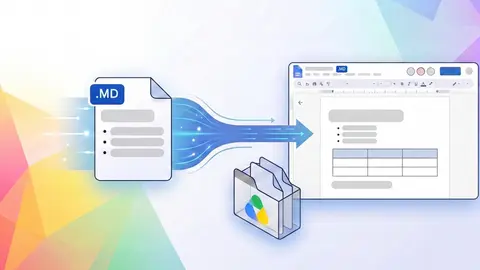
From the Oct 27 brief · item 05 → - Google Docs edits Markdown files natively and Drive previews them, aimed at humans and agents working together
Take · More and more agent-written plans and docs are Markdown, and reviewing them meant either reading diffs in Git or converting to Docs and back. Now non-technical colleagues can comment on the .md file itself in Docs. I will try this for PandaClaws long-form drafts, but the announcement says nothing about syncing with a Git repo, so getting files into the repo is still on you.
From the Oct 27 brief · item 07 → - Tools aws.amazon.com ↗AWS lays out prompt caching for OpenAI models on Bedrock: combine implicit and explicit breakpoints, with a 1,024-token minimum prefix
Take · These rules apply well beyond Bedrock: putting a timestamp at the top of the system prompt is the most common cache-buster I see. In my post on a month of real RAG bills, controlling context length paid back the most, and agents are the same: make tool definitions and instructions a fixed prefix, watch the cache hit rate, and only then think about switching models.
From the Oct 27 brief · item 09 →
-
-
Oct 26 · Mon · 1 item
- Tools aws.amazon.com ↗Web Search on Amazon Bedrock adds domain filtering and user location, with up to 100 allowed or blocked domains
Take · As in my RAG retrieval checklist post, uncontrolled sources are the most common hole in web-grounded answers. For support or documentation Q&A I'd lock allowed_domains to our own docs plus a few authoritative sites first, then measure how much answer coverage drops. It's US Regions only for now, so for business in China it's a reference point for the moment.
From the Oct 26 brief · item 03 →
-
-
Oct 25 · Sun · 1 item
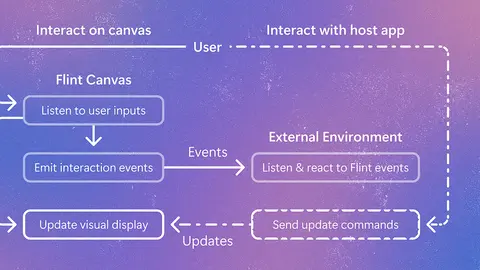
- Research microsoft.com ↗Microsoft Research introduces Flint-interactive, letting agents produce interactive charts from an interaction spec instead of rounds of code and debugging
Take · Having the model emit a spec instead of code is one of the cheapest ways to cut agent failure rates, and charts are just one case. I'd try Flint-MCP in a feature that produces reports for users and compare failure rate and token use against letting the model write front-end code; there's no published evaluation, so measure it yourself.
From the Oct 25 brief · item 07 →
-
-
Oct 24 · Sat · 2 items
- Safety microsoft.com ↗LiteLLM 1.107.0 was a poisoned release: malicious code ran through Python startup hooks and stole credentials without LiteLLM ever being imported
Take · A model gateway holds more keys than anything else in the stack, and this time CI runners and laptops that merely had it installed were exposed too. I'd grep every lock file and image for 1.107.0, treat any hit as a credential leak and rotate everything; from now on pin gateway images by digest and review upgrades by hand instead of pulling floating tags.
From the Oct 24 brief · item 01 → - Research aws.amazon.com ↗AWS shows the full bill for one multi-turn RL run: about $339 took gpt-oss-20b from a 61% to an 84% Wordle solve rate
Take · The $339 figure is useful: for a multi-step task with clear rules and automatic scoring, one RL run on a small open model now costs less than an outsourced test pass. Rubric-driven follow-up questioning in an AI interview product could try the same recipe, but get the scoring function solid first so the model doesn't learn to game it.
From the Oct 24 brief · item 07 →
-
-
Oct 23 · Fri · 3 items
- Industry anthropic.com ↗Anthropic donates the Agent Skills standard to the Linux Foundation's AAIF: more than 70 agent platforms, about 1 million skills published and nearly 280 million installs
Take · I'd write the team's internal prompts and runbooks to the SKILL.md spec rather than any one vendor's format: with the standard in a neutral foundation, the same skills should move between Claude Code, Codex and Copilot as they are. PandaClaws' content pipeline is already a step-by-step procedure, which is exactly what a skill is for. Treat installing someone else's skill like adding a dependency; until the security guidance lands, only install skills whose scripts you've read.
From the Oct 23 brief · item 01 → - Tools aws.amazon.com ↗SageMaker AI training sessions are generally available: write your own post-training loop and reward function while AWS runs the GPUs, billed by tokens processed
Take · Not paying while your reward function scores matters a lot for multi-turn agent training: a slow evaluation environment no longer burns GPU money. I'd take an end-state reward like the ThinkingBox one in the next item, run a few dozen steps on a small open model to see the curve, and only then decide whether a fixed task deserves its own specialized model.
From the Oct 23 brief · item 05 → - Research huggingface.co ↗Microsoft open-sources ThinkingBox-Training: using final database state as the reward, 50 GRPO steps take Qwen3.8-27B from 51.70% to 60.78% average success
Take · Even without training, use this idea for evaluation first: when an agent organizes or moves files in AI Cloud Drive, acceptance should check what the folders and permissions end up as, not whether the agent says it's done. Tasks passed 20 out of 20 going from 38 to 107 tracks the production experience better than the average, and that metric is worth copying.
From the Oct 23 brief · item 06 →
-
-
Oct 22 · Thu · 2 items
- Industry blog.cloudflare.com ↗Commerce.com turns on WebMCP across its storefronts through Cloudflare's edge, giving shopping agents structured tools instead of HTML guesswork
Take · The standard is still experimental, so there's no rush to ship, but it's worth listing the three to five actions agents most often do on your product, such as searching files in AI Cloud Drive or checking stats in PandaClaws, and exposing them as read-only tools first. Platforms can copy the approach here: on by default, with an opt-out per tenant. Today's pick axuse makes the same case from the other side: structured interfaces beat screenshots and clicks.
From the Oct 22 brief · item 07 →
-