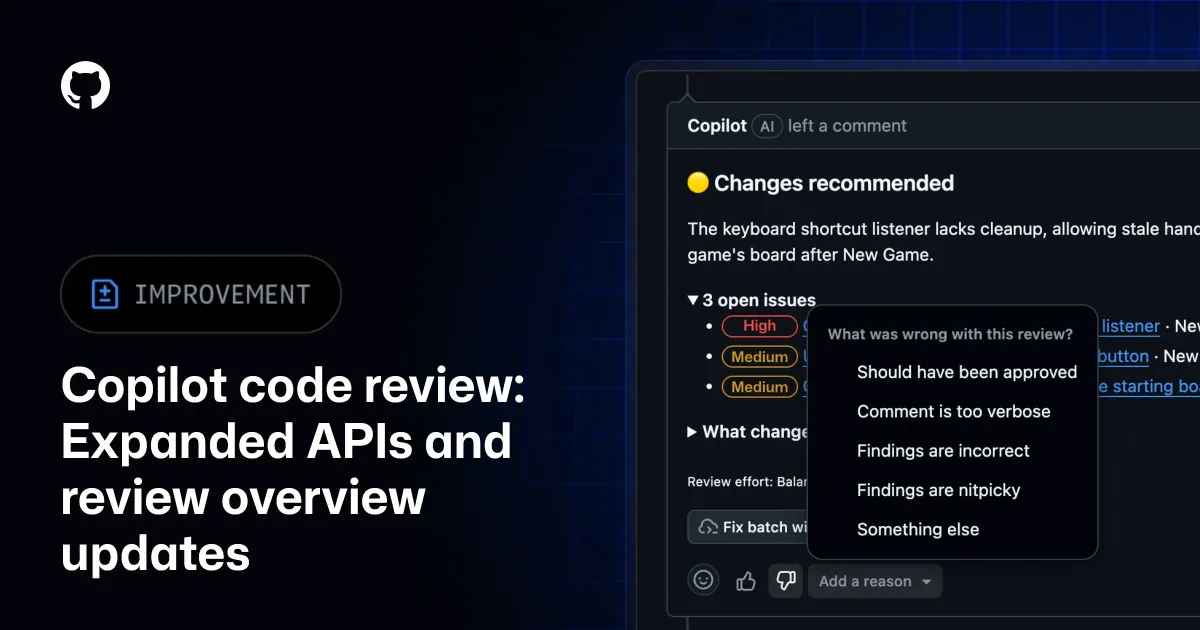
Copilot code review settings can be managed through the REST and GraphQL APIs from enterprise down to repository, and comments report the skills, MCP servers and custom instructions they drew on
Code review turns from a per-repository toggle into policy you can configure and audit with scripts.
// Key points
- Enterprise admins can enable or disable code review for all organizations; organization admins manage enablement, default review effort and runner configuration, and enterprise-managed settings cannot be overridden
- Repository admins manage review effort and whether reviews use custom instructions and MCP tools; repository endpoints support GitHub Apps and fine-grained PATs, enterprise and organization endpoints do not
- The API identifies Copilot reviews and comments through explicit attribution fields, and reports the review effort used and the skills, MCP servers and custom instructions behind a comment
- The review overview is more compact, review agent sessions show the AI credits a review consumed, and the automatic-review repository rule now honors its bypass list
Builder's takePut this next to the addressed-rate metric from two days ago: GitHub is making review measurable and configurable. I would keep each repository's review effort in a config repo via this API, then use the per-review credit figure to drop effort on low-adoption repos and spend the savings on core ones.
// Background · from #Coding agents
Full timeline →- Nov 8 @GitHub in Slack and Teams is generally available: investigate bugs, create issues, implement changes and open pull requests from a conversation, with Canvas in Teams for reviewing plans together
- Nov 7 AWS runs Claude Code as a remote agent on Bedrock AgentCore: one microVM per task, up to three attempts, and a draft pull request unless verification passes
- Nov 7 Foundry Local runs Qwen3.8-27B at 4-bit in about 18 GB, on 24 GB consumer GPUs with up to 64K context, as a GitHub Copilot model provider