Agile Practices Worth Adopting for Engineering Teams This Quarter
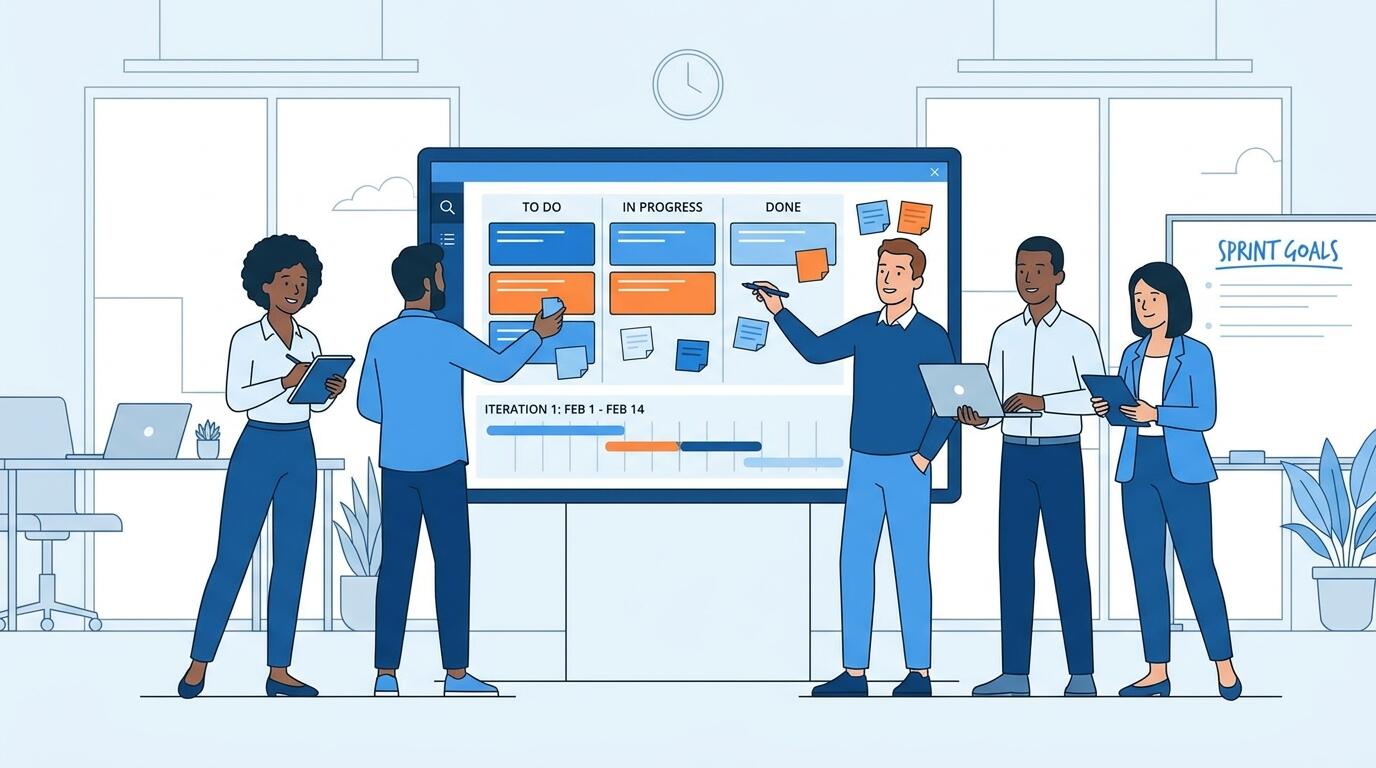
ALT: Agile practices for engineering teams — sprint planning, iteration cycles, and team collaboration in action
Why Agile Practices Still Deserve a Hard Look from Engineering Teams Right Now
Key Conclusion: Agile methodologies are not a solved problem. Engineering teams that revisit their sprint cadences, collaboration rituals, and continuous integration habits this quarter will find concrete gains in delivery speed, product quality, and team alignment. The agile practices worth adopting today are not the textbook ceremonies from a decade ago — they are a refined, engineering-centered set of habits that balance technical rigor with adaptive planning, and they are increasingly essential for teams building AI-powered or otherwise complex software systems.
Most engineering teams have lived through at least one failed agile transformation — the kind where daily standups became theatrical check-ins and retrospectives turned into 30-minute complaint sessions with no follow-through. That experience has made many technical leaders justifiably skeptical. And yet the underlying case for iterative, feedback-driven engineering is stronger than ever. The question worth asking this quarter is not whether agile is worth pursuing, but which specific practices actually move the needle for modern engineering teams — and which ones are noise.
The State of Agile in Engineering Teams Today
Agile methodology — broadly defined as an iterative approach to software development that prioritizes working software, customer collaboration, and responsiveness to change over rigid upfront planning — has been mainstream for well over a decade. The Agile Manifesto, published in 2001 by a group of software practitioners, formalized principles that many experienced engineers had already arrived at through trial and error. Since then, frameworks like Scrum, Kanban, SAFe, and Shape Up have proliferated across organizations of every size.
What the current landscape actually looks like is more complicated. Many teams operate under the label of agile while running processes that are, in practice, mini-waterfalls: fixed scope crammed into two-week sprints, story points used as productivity surveillance tools, and backlogs so bloated they function as wishlist archives rather than living planning documents. According to research cited by Scrum.org in their piece on agile engineering practices, technical practices — the engineering habits that make agile actually work, like test-driven development, continuous integration, and refactoring — are frequently deprioritized in favor of process ceremonies. The result is teams that are agile in name but brittle in execution.
At the same time, the problems agile was designed to solve have only intensified. AI-powered products introduce probabilistic behavior, non-deterministic outputs, and rapid model iteration cycles that traditional development workflows simply were not built for. Scalable systems demand continuous deployment pipelines, infrastructure-as-code practices, and observability tooling baked into the development loop from day one. Founders and CTOs building in this environment cannot afford to treat agile practices as a checkbox — they need to treat them as a competitive engineering capability.
A pattern consistently observed across engineering teams at various stages of maturity is that the teams delivering most reliably are not necessarily the ones following the most rigorous process. They are the ones that have internalized a small set of high-leverage practices and execute them with discipline. The ceremonies are lightweight; the engineering habits are deep.
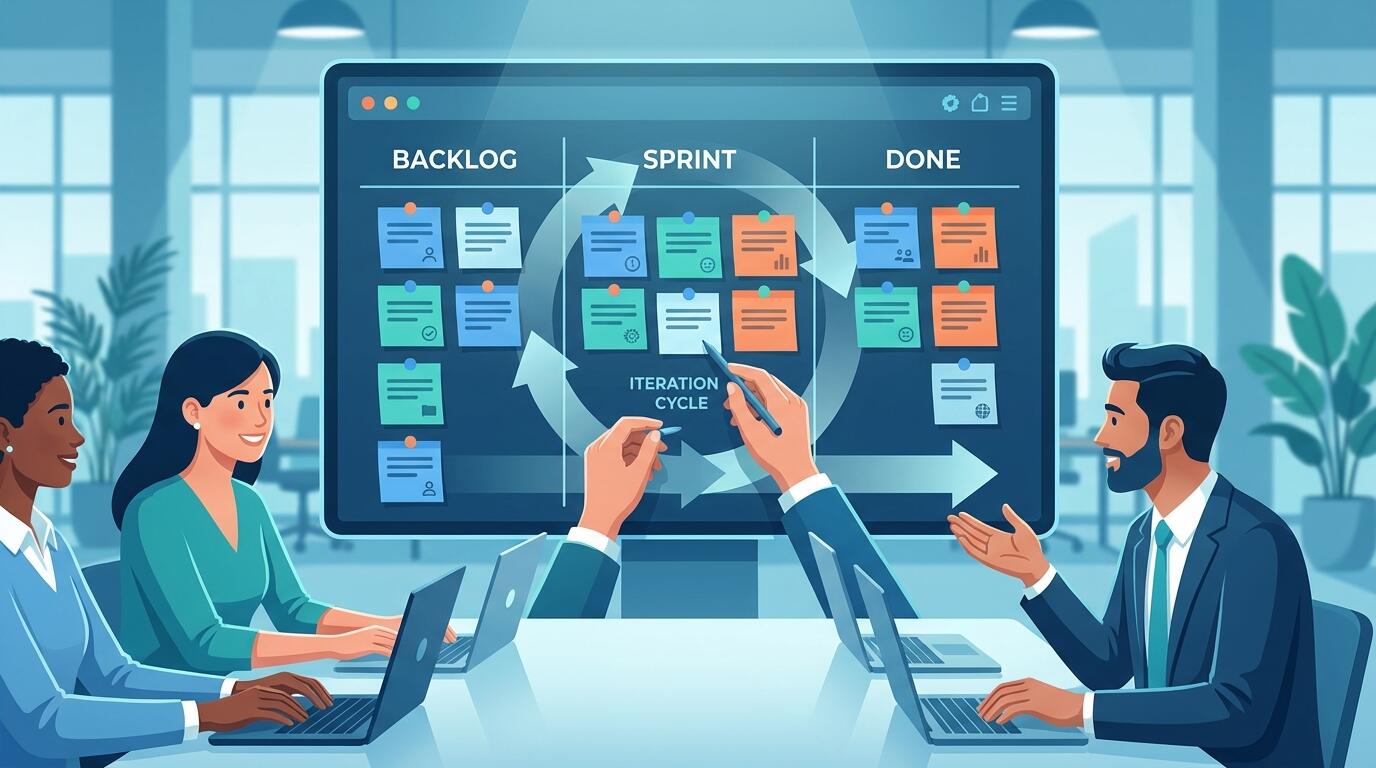
ALT: Engineering team sprint planning session showing agile kanban board, iteration cycles, and collaborative task prioritization
The Underlying Mechanics: Why Certain Agile Practices Deliver More Value
Agile's highest-leverage practices share a common mechanism: they shorten the feedback loop between a decision and its consequences. When a feedback loop is short, bad decisions are caught early and corrected cheaply. When feedback loops are long, errors compound, and rework becomes expensive. Understanding this mechanism helps teams decide which practices to invest in and which to deprioritize.
Continuous Integration and Continuous Delivery
Continuous integration (CI) is the practice of merging code changes into a shared mainline frequently — ideally multiple times per day — with automated testing validating each merge. This is one of the most reliably high-value engineering practices a team can adopt, and it is one of the most commonly neglected. Teams that let feature branches live for days or weeks before integration accumulate merge debt silently, then pay for it in painful, destabilizing integration events. CI removes that debt incrementally, making it negligible.
Continuous delivery extends CI by ensuring that the mainline is always in a deployable state. This does not mean deploying constantly — it means the option to deploy is always available, which fundamentally changes how teams plan and prioritize. When deployment is a non-event, teams stop over-engineering releases and start shipping incrementally. For teams building AI-powered products, this is especially valuable: model updates, prompt changes, and feature flags can be shipped and observed in production without ceremony.
Test-Driven Development and Refactoring
Test-driven development (TDD) is a practice where engineers write a failing test before writing the implementation code that makes it pass. As noted in Scrum.org's analysis of agile engineering practices, TDD and ongoing refactoring are among the technical disciplines most correlated with long-term codebase health — and among the most frequently abandoned under delivery pressure. In practice, teams that skip TDD often accumulate a class of bugs that only surface in integration or production, which is precisely the worst time to find them.
Refactoring — the disciplined process of improving code structure without changing its external behavior — is TDD's partner practice. Without regular refactoring, codebases accumulate technical debt that makes each subsequent change slower and riskier. This is not a metaphor. It is a compounding mechanical drag on delivery velocity.
Iteration Planning with Explicit Scope Management
Sprint planning is one of the most widely practiced agile rituals and one of the most widely misunderstood. The value of iteration planning is not in the ceremony itself — it is in the act of making explicit commitments with explicit scope. Teams that practice genuine scope management, cutting work from a sprint rather than adding scope mid-sprint, develop a calibration muscle that improves forecast accuracy over time. Teams that treat sprint scope as a soft suggestion do not.
A pattern worth noting here: teams under pressure often over-commit to sprints as a way of signaling ambition. This consistently produces the opposite of the intended effect — incomplete work carries forward, velocity measures become unreliable, and the team's credibility with stakeholders erodes. The more durable approach is to under-commit modestly and deliver completely. Aha.io's guide on agile best practices for product managers and engineers reinforces this point, noting that sustainable pace and realistic commitment are foundational to long-term agile effectiveness.
Retrospectives with Closed-Loop Follow-Through
Retrospectives are the agile practice most often executed poorly. A retrospective is a team meeting held at the end of an iteration to examine what went well, what did not, and what the team will do differently. The critical element — follow-through — is what separates retrospectives that improve teams from retrospectives that merely document frustrations.
The pattern observed in teams where retrospectives actually work is simple: each retrospective produces a maximum of two or three action items, each assigned to a specific person, each reviewed at the opening of the next retrospective. That is the entire mechanism. Teams that generate ten action items per retrospective and review none of them would be better served by no retrospective at all.
Evidence and Competing Approaches: Finding What Actually Fits
Agile is not a monolith, and the honest answer for most engineering teams is that the right approach is a deliberate hybrid rather than wholesale adoption of any single framework. Research cited in a LinkedIn analysis of agile project outcomes suggests that poorly implemented agile can actually increase project failure rates — a finding that underscores the importance of choosing practices with intention rather than adopting the full ceremony stack wholesale.
The comparison below reflects real trade-offs that engineering teams navigate when evaluating how deeply to invest in different agile approaches.
| Perspective / Approach | Strengths | Trade-offs | Best Fit |
|---|---|---|---|
| Scrum (full framework) | Clear roles, defined cadences, established retrospective and review loops | Heavy ceremony overhead; requires disciplined facilitation to avoid theater | Teams building products with regular stakeholder touchpoints and defined sprint boundaries |
| Kanban | Visual flow management, no fixed iteration length, reduces WIP naturally | Less structure for planning; requires strong team self-discipline | Ops-heavy or support-oriented engineering teams; teams with irregular incoming demand |
| Shape Up (Basecamp) | Six-week cycles with genuine scope flexibility; reduces backlog bloat | Less adoption outside certain company cultures; requires strong product leadership | Product teams with experienced engineers and low stakeholder ceremony requirements |
| Engineering-led agile (TDD + CI/CD focus) | Directly improves code quality and deployment safety; highly transferable | Easy to deprioritize under deadline pressure; requires upfront investment in tooling | Any team building production software that needs to sustain delivery velocity over time |
| Hybrid / minimalist agile | Tailored to team context; avoids ceremony overhead | Requires honest self-assessment and discipline; can drift toward ad hoc chaos | Experienced teams who have internalized agile values and need less structural scaffolding |
For teams in the process of validating a new product idea with real customers before building, lightweight Kanban or Shape Up cycles often provide more flexibility than Scrum's fixed sprint structure, since the nature of discovery work is inherently non-uniform.
For teams building AI-powered systems — where experimentation, model evaluation, and infrastructure iteration are core activities — the engineering-led practices (CI/CD, automated testing, observability) tend to deliver more sustained value than any particular planning ceremony.
Where Agile Practice Is Heading and What It Means for Your Team
The most significant shift happening in agile practice right now is the re-centering of technical engineering disciplines as foundational rather than optional. For a period, the agile community — at least the consulting and certification slice of it — over-indexed on process ceremonies and under-indexed on the engineering practices that make iterative delivery actually safe. That pendulum is swinging back.
This shift matters practically for engineering teams because it suggests a clear set of priorities for this quarter. If your team has mature planning ceremonies but shaky CI/CD pipelines, fix the pipelines first — the delivery safety gains are larger and more durable. If your retrospectives are generating action items that never close, cut the action item count until follow-through becomes reliable before adding process complexity.
The rise of AI in the software development stack — both as a subject of the products being built and as a tooling layer in the development process itself — is creating new demands on agile practice. Teams building machine learning pipelines, for example, need iteration structures that can accommodate experiment tracking, dataset versioning, and model evaluation cycles that do not map neatly onto traditional two-week sprints. Understanding how to build machine learning pipelines that scale past the prototype stage is increasingly a prerequisite for engineering teams that want to deliver AI-powered products iteratively without accumulating infrastructure debt.
The actionable takeaways for this quarter are direct:
- Audit your CI/CD pipeline. If it takes more than a few minutes to get feedback on a commit, that is a concrete improvement opportunity with measurable payoff.
- Reduce your sprint commitments until your team is completing what it commits to. Reliable delivery builds more organizational trust than ambitious forecasts.
- Run one retrospective with a two-action-item ceiling and full follow-through before the next one. Experience the difference before scaling the practice.
- If you are adopting agile practices in an AI product context, map your experiment cycles explicitly and decide whether sprint boundaries or flow-based planning better serves the nature of that work.
Common Questions
Q1: How do engineering teams know which agile practices to prioritize first?
The most direct way to prioritize is to identify your team's primary delivery bottleneck and address it with a targeted practice. If code quality and integration pain are the core issue, start with continuous integration and automated testing. If planning and scope management are causing missed commitments, tighten sprint planning and scope discipline. Agile practices deliver the most value when they address a specific, observable problem — not when adopted wholesale as a framework.
Q2: Are agile practices compatible with building AI-powered products?
Agile practices are not only compatible with AI product development — many are essential to it. The iterative nature of machine learning development (experiment, evaluate, iterate) maps naturally onto agile's feedback-loop philosophy. The critical adjustment is that sprint boundaries may need to accommodate longer experiment cycles, and CI/CD pipelines need to extend to model artifacts and data pipelines, not just application code. Per Scrum.org's analysis of agile engineering practices, technical disciplines like automated testing and continuous integration are the practices most transferable to AI development contexts.
Q3: How long does it take for agile practices to show meaningful results?
Results from agile practice adoption are typically visible within one to three iteration cycles when the practices are implemented with discipline and follow-through. CI/CD pipeline improvements tend to show the fastest return — teams often see reduced integration pain and deployment friction within the first sprint of consistent use. Planning and retrospective practices take longer to calibrate, as they depend on the team developing accurate commitment habits and closing action-item loops reliably over multiple cycles.
Wrapping Up
The engineering teams that get the most out of agile this quarter will be the ones that resist the urge to adopt everything and instead pick a small set of practices and execute them with rigor. Three points are worth holding onto.
First, technical practices — CI/CD, TDD, refactoring — are not optional enhancements to agile; they are the foundation that makes agile delivery safe and sustainable. No amount of planning ceremony compensates for a fragile codebase or an unreliable deployment pipeline.
Second, the practices that most reliably improve team performance are the ones that shorten feedback loops and close loops completely: commits that get tested immediately, sprints that commit to achievable scope, retrospectives that produce action items that actually close.
Third, the right agile approach for your team is context-dependent. A startup validating an AI product idea in early iterations has different needs than a scaling engineering team running a production ML pipeline. Honest assessment of your team's actual bottlenecks — not adoption of a framework because it worked for someone else — is the real starting point.
If you are currently working through the process of structuring an AI-powered product for scalable delivery, understanding what to expect from an AI architecture engagement can help you align your agile planning practices with the realities of AI systems design from the outset.
The next step is straightforward: pick one practice from this article, apply it to your next iteration, and measure the result. Not the abstract result — the concrete one. Then build from there.
Ready to move from process discussion to shipped product? Visit Darius for real-world engineering insights, project breakdowns, and AI architecture guidance built on the experience of delivering live products end to end.
References
- Scrum.org. "Agile Engineering Practices: A Revival".
https://www.scrum.org/resources/blog/agile-engineering-practices-revival - Aha.io. "Agile Best Practices: A Guide For PMs And Engineers".
https://www.aha.io/roadmapping/guide/agile/best-practices - LinkedIn / Chris Croft Training. "Measuring Agile Project Success Without Forecast Finish ...".
https://www.linkedin.com/posts/chriscrofttraining_268-higher-failure-rates-for-agile-software-activity-7481666693715550208-s16a - IEEE (Institute of Electrical and Electronics Engineers) — Standards and publications on software engineering processes and practices.
https://www.ieee.org/
Note: Standards and research findings may be updated; please check the latest official documents or consult professional advisors before making implementation decisions.